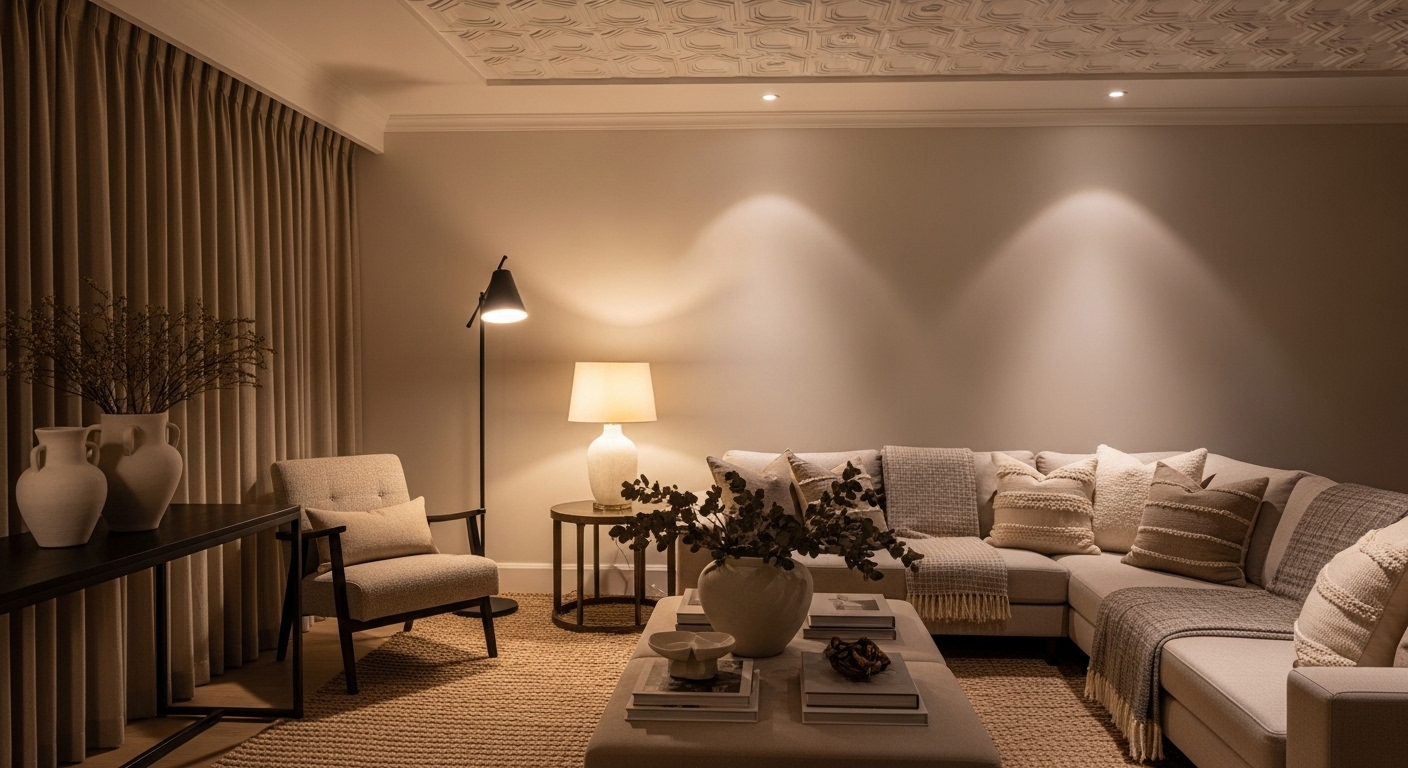
23 Living Room Design Ideas That Look Expensive
Your living room should feel like a space you’re proud to show off—and actually enjoy spending time in. These Living Room Design Ideas are all about creating that “expensive” look without needing a full renovation or huge budget.
If your space feels a little plain, cluttered, or unfinished, you’re not alone. I’ve noticed many people struggle with making their living room feel cohesive and elevated, even after buying new furniture or decor. The good news is, small design choices can completely change how a room looks and feels. From lighting tricks to layout shifts, the right ideas can instantly add depth, warmth, and style.
In this guide, you’ll discover simple yet powerful upgrades that make a real difference in everyday homes. Whether you’re refreshing your space or starting from scratch, these ideas are designed to inspire, simplify decisions, and help you create a living room that feels both beautiful and intentional.
Statement Lighting Focus
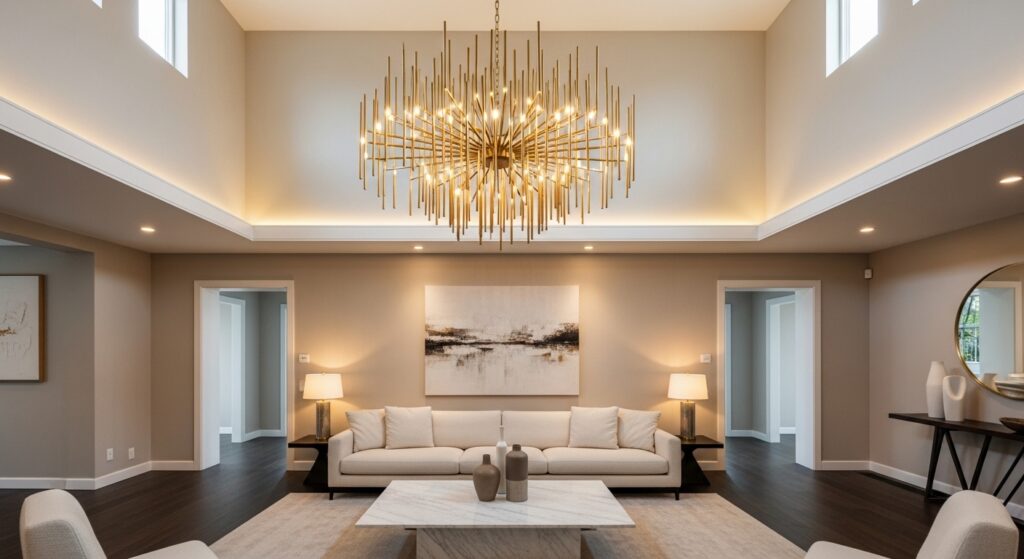
- Instantly creates a luxury focal point without changing everything else
- Draws the eye upward, making the room feel larger
- Adds warmth and ambiance in the evenings
- Works even in simple or neutral spaces
A bold lighting fixture can completely shift how a space feels the moment you walk in. Instead of relying on basic ceiling lights, a statement chandelier or sculptural pendant instantly adds depth and visual interest. In my experience, even the simplest room starts to feel curated and intentional when lighting becomes the centerpiece rather than an afterthought.
This approach works beautifully because it combines both function and design in one upgrade. You’re not just adding light—you’re shaping mood, shadows, and atmosphere. Many high-end interiors rely heavily on layered lighting, and starting with one standout piece makes everything else feel more cohesive. If you’re exploring Living Room Design Ideas that feel elevated without major renovation, this is one of the easiest upgrades.
Neutral Luxe Palette
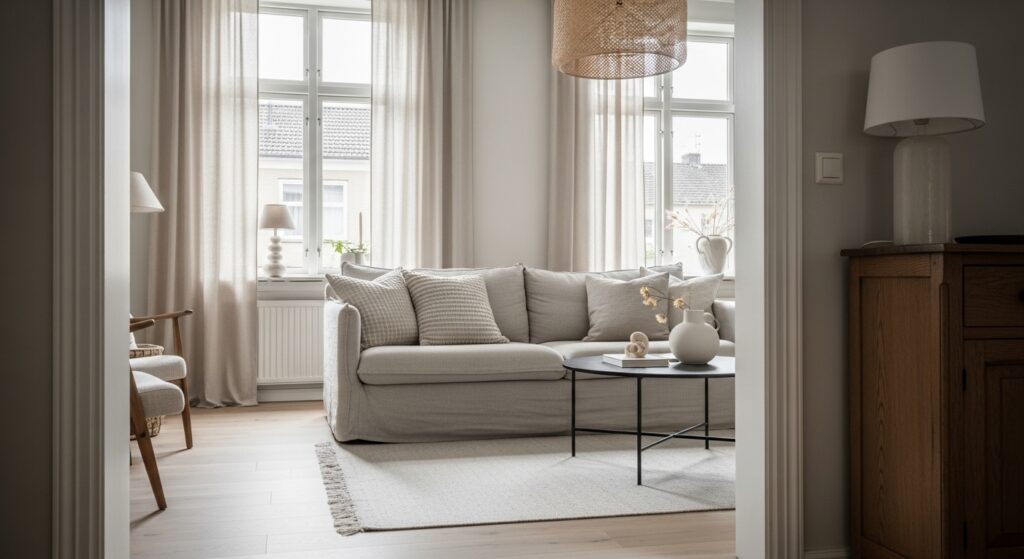
- Makes the room feel calm, open, and expensive
- Easy to mix and match textures without clashing
- Reflects light beautifully, brightening the space
- Creates a timeless look that doesn’t go out of style
A neutral color palette has a quiet power that instantly makes a space feel refined. Soft tones like cream, taupe, and warm gray create a seamless flow that feels intentional rather than busy. I’ve noticed that when colors are toned down, textures and materials start to stand out more, which naturally adds depth without overwhelming the eye.
This style works especially well because it creates flexibility while still feeling luxurious. You can easily update decor, swap cushions, or add seasonal touches without disrupting the overall look. That’s why many designers recommend neutral bases—they act like a canvas for layering sophistication. When done right, even budget-friendly pieces start to feel high-end and thoughtfully placed.
Floor-To-Ceiling Curtains
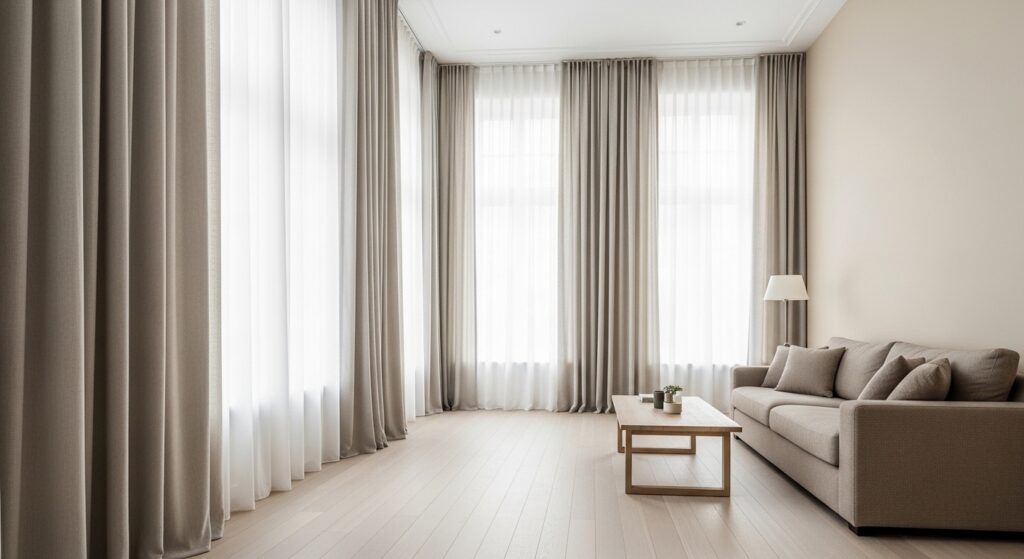
- Makes ceilings appear taller instantly
- Adds softness and movement to the room
- Enhances natural light without harsh glare
- Creates a polished, finished look
Curtains that stretch from ceiling to floor have a dramatic impact that most people underestimate. Instead of cutting the wall visually, they elongate it, making the entire space feel taller and more open. I’ve seen this work especially well in smaller rooms where height becomes the key to creating a more expansive feeling.
What makes this idea stand out is how simple yet transformative it is. By mounting curtain rods higher than the window frame, you trick the eye into seeing more space than actually exists. This is one of those Living Room Design Ideas that feels subtle but delivers a big visual upgrade. The result is a room that feels airy, intentional, and effortlessly elegant.
Oversized Wall Art
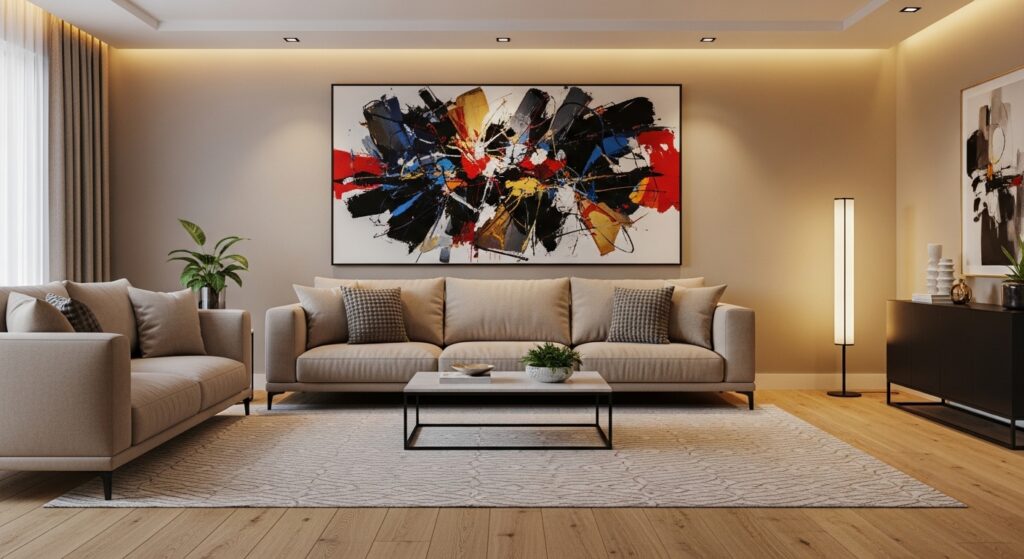
- Instantly fills empty wall space without clutter
- Creates a strong focal point in the room
- Makes the space feel curated and intentional
- Works better than multiple small frames
A single oversized artwork can completely redefine the energy of a space. Instead of scattering multiple small pieces, one bold canvas creates clarity and visual confidence. I’ve noticed that rooms with large-scale art feel more designed and less accidental, even when the rest of the decor is simple and minimal.
This approach works because it simplifies visual noise while still making a strong statement. It also allows your furniture and textures to shine without competing for attention. Many upscale interiors rely on fewer but larger elements to create impact. When you’re exploring Living Room Design Ideas that feel elevated without adding clutter, this is a powerful and surprisingly easy upgrade.
Layered Area Rugs
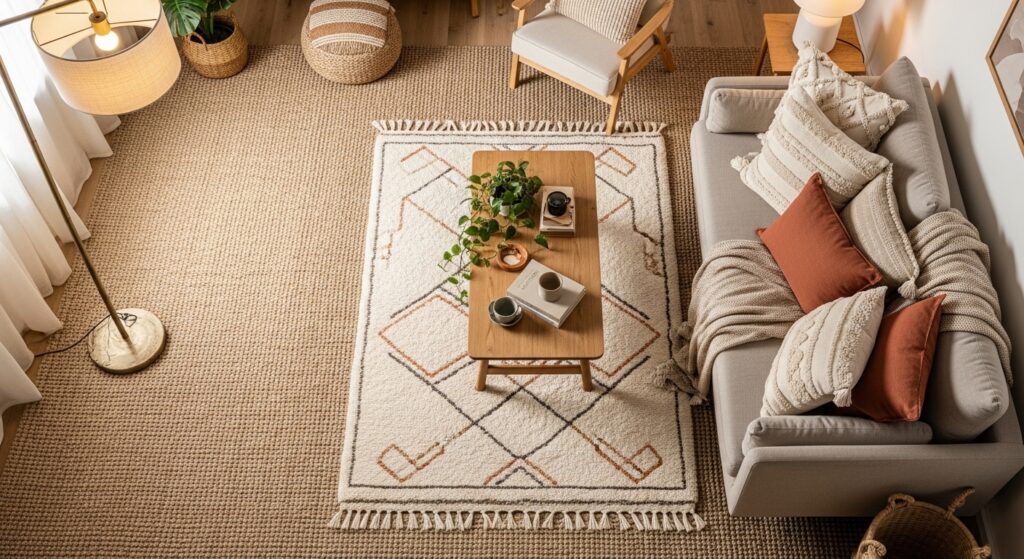
- Adds depth and texture to flat flooring
- Helps define seating areas clearly
- Makes the room feel cozy and styled
- Allows mixing patterns without overwhelming
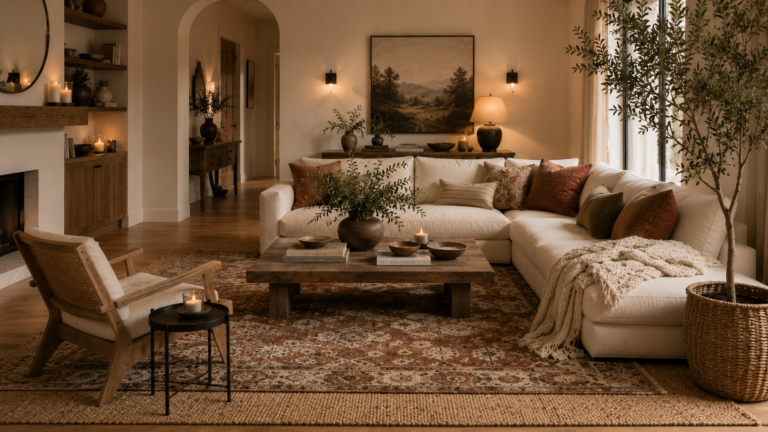
Layering rugs is one of those subtle tricks that instantly makes a room feel thoughtfully designed. Instead of relying on a single rug, combining textures like jute and soft woven patterns creates dimension underfoot. In my experience, this works especially well in open spaces where defining zones can make everything feel more organized.
The beauty of this idea is its flexibility and visual richness. You can mix neutral bases with patterned accents to add personality without making the room feel busy. Designers often use this technique to create warmth while keeping the overall palette balanced. It’s a small change that delivers a big visual payoff, making the space feel layered, comfortable, and complete.
Gold Accent Details
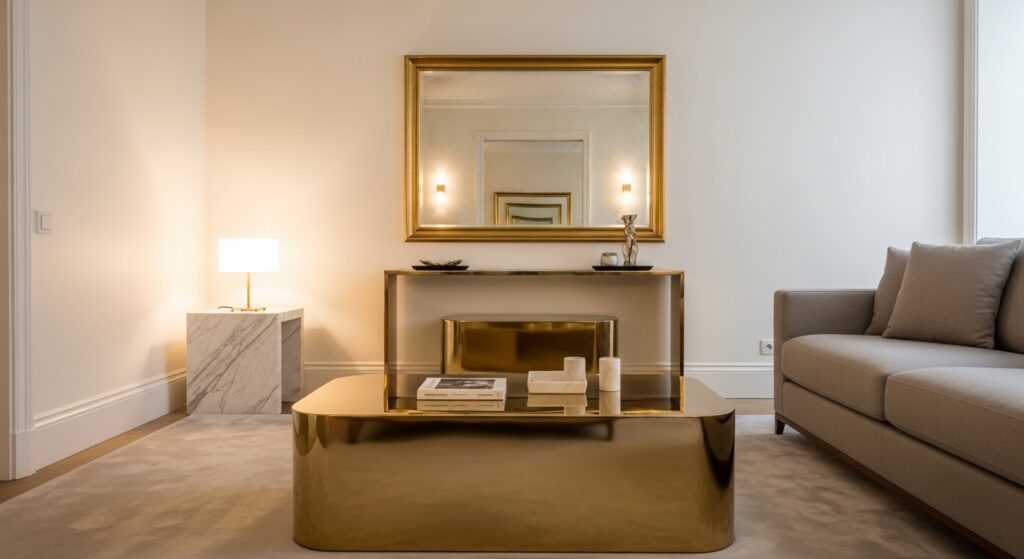
- Adds instant luxury without major expense
- Reflects light for a soft, warm glow
- Pairs well with both modern and classic styles
- Works in small doses for maximum impact
Gold accents have a way of elevating even the simplest spaces. Whether it’s a mirror frame, table legs, or small decor pieces, that hint of metallic warmth brings a refined touch. I’ve seen this work well in neutral rooms where a little shine adds contrast without overwhelming the design.
What makes this approach effective is its restraint. Instead of overloading the space, a few carefully chosen accents create balance and sophistication. That’s why many designers recommend using metallics sparingly to highlight key areas. The result feels polished and intentional, turning everyday furniture into something that looks far more expensive than it actually is.
Symmetrical Furniture Layout
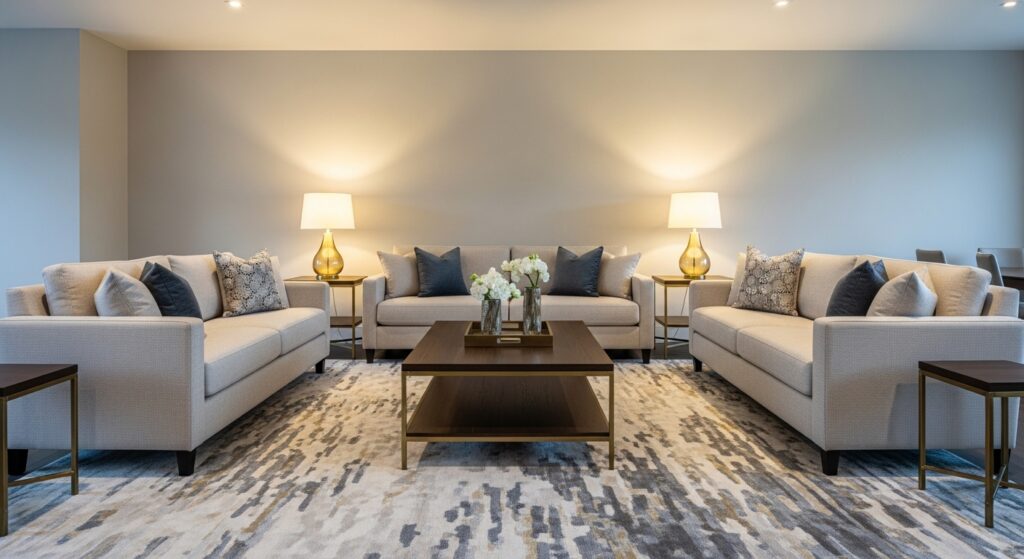
- Creates a sense of order and calm
- Makes the room feel professionally designed
- Balances visual weight evenly
- Works well for both small and large spaces
Symmetry is one of the easiest ways to make a space feel structured and high-end. When furniture is arranged in a balanced way, the room instantly feels more organized and visually pleasing. I’ve noticed that even mismatched pieces start to feel cohesive when they follow a symmetrical layout.
This idea works because our eyes naturally gravitate toward balance. It reduces visual chaos and creates a sense of harmony that feels intentional. That’s why many luxury interiors rely on mirrored arrangements and paired elements. When done right, it gives the impression of careful planning, even if the individual pieces themselves are simple or budget-friendly.
Textured Throw Layers
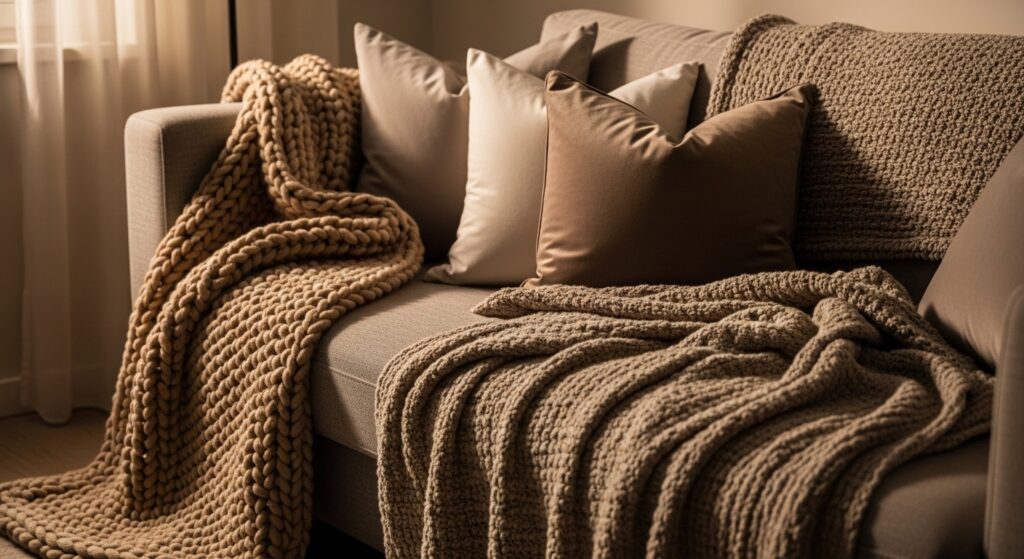
- Adds warmth and softness instantly
- Makes seating areas feel more inviting
- Introduces texture without changing color scheme
- Easy to update seasonally
Layering throws and cushions is one of the simplest ways to upgrade a space without spending much. Different textures like knit, velvet, and linen create depth that makes the room feel more complete. In my experience, even a basic sofa can look styled and intentional with just a few well-chosen layers.
This works because texture adds visual interest without relying on bold colors or patterns. It creates a cozy, lived-in feeling while still looking polished. Designers often use layering to soften sharp lines and make spaces feel more approachable. The result is a room that feels both comfortable and elevated, perfect for everyday living and entertaining.
Minimal Coffee Table Styling
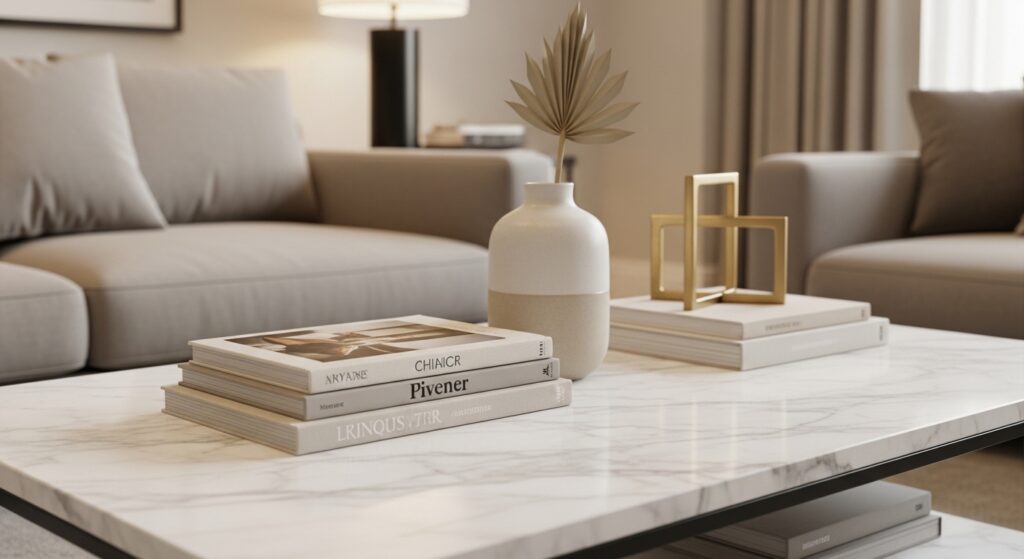
- Keeps the space looking clean and intentional
- Highlights quality over quantity
- Prevents visual clutter
- Makes decor feel more curated
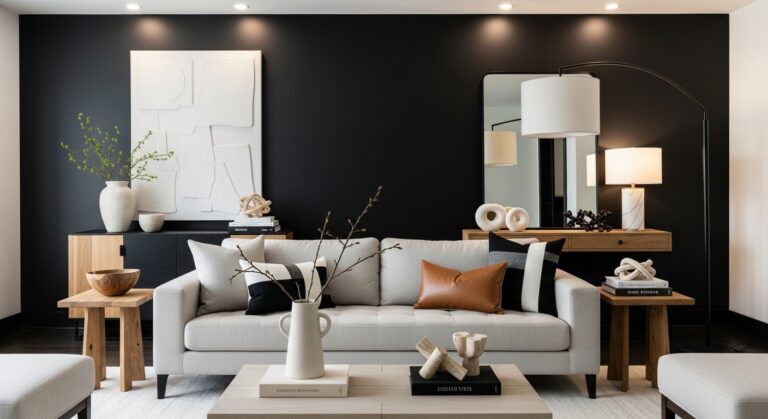
A cluttered coffee table can quickly make a room feel messy, no matter how beautiful everything else is. Keeping it minimal with just a few curated items creates a polished and intentional look. I’ve noticed that using fewer pieces actually makes each one stand out more.
This idea works because it shifts the focus from quantity to quality. A small stack of books, a simple vase, and one decorative object are often enough to create balance. That’s why many designers recommend editing down rather than adding more. The result is a clean, refined surface that enhances the overall feel of the room instead of overwhelming it.
Built-In Shelving Units
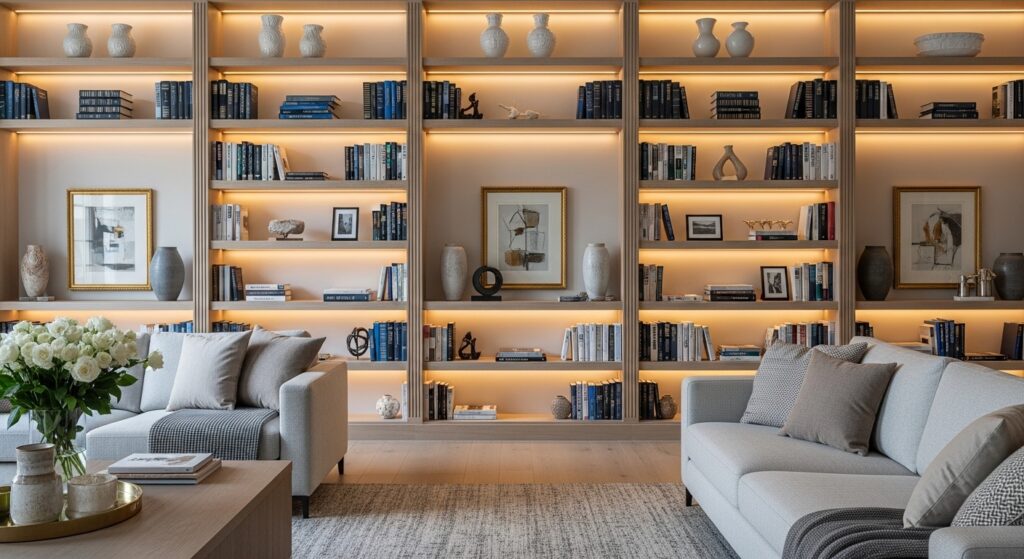
- Adds architectural interest to plain walls
- Provides stylish storage and display space
- Makes the room feel custom-designed
- Helps reduce clutter
Built-in shelving instantly gives a room a more permanent and high-end feel. Instead of standalone furniture, it creates the impression of custom design tailored to the space. I’ve seen this transform even basic living rooms into something that feels thoughtfully planned and cohesive.
What makes this idea so effective is both its function and visual appeal. It offers storage while also acting as a design feature that frames the room. When styled with a mix of books, decor, and negative space, it feels balanced and intentional. This is one of those Living Room Design Ideas that adds long-term value while making everyday living more organized and visually pleasing.
Large Mirror Placement
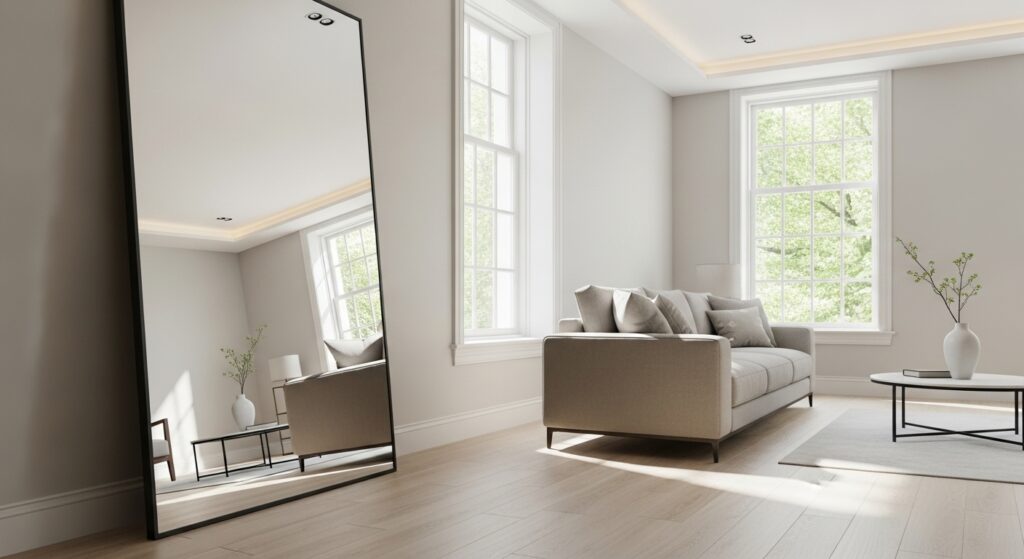
- Makes the room feel bigger instantly
- Reflects light to brighten darker areas
- Adds a subtle decorative element
- Works in both modern and classic spaces
A large mirror can completely change how a room feels without adding clutter. By reflecting light and space, it creates the illusion of a larger and brighter area. I’ve noticed that placing a mirror opposite a window makes a dramatic difference, especially in smaller or dim spaces.
This technique works because it plays with perception rather than physical changes. It amplifies natural light and opens up the room visually. Designers often use mirrors strategically to enhance depth and balance. The result is a space that feels more open, airy, and refined without requiring any major renovation or expense.
Hidden Cable Setup
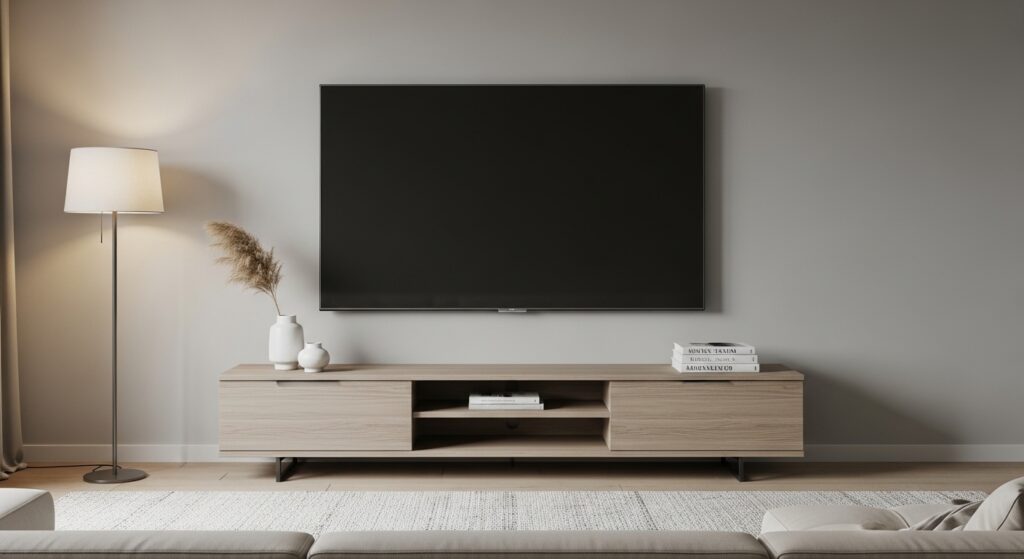
- Creates a clean and polished look
- Removes visual distractions
- Makes the space feel more modern
- Enhances overall organization
Visible cables can instantly ruin the look of an otherwise beautiful room. Hiding them creates a clean and seamless appearance that feels much more intentional. In my experience, this small change makes one of the biggest visual differences, especially in entertainment areas.
This idea works because it eliminates unnecessary distractions and keeps the focus on design rather than clutter. Whether using cable organizers or wall-mounted solutions, the goal is simplicity. That’s why many modern interiors prioritize clean lines and hidden elements. The result is a space that feels calm, organized, and effortlessly refined.
Mixed Material Furniture
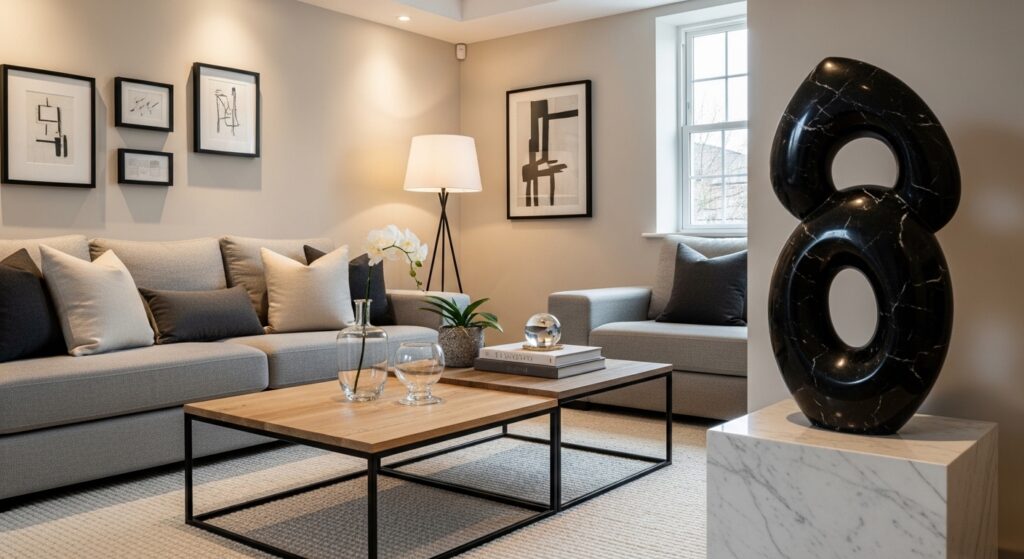
- Adds depth and visual contrast
- Makes furniture look more high-end
- Prevents the room from feeling flat
- Blends different styles seamlessly
Mixing materials is a simple way to make a room feel more dynamic and layered. Combining wood, metal, glass, and fabric creates contrast that adds richness to the space. I’ve seen this approach work especially well when the color palette is neutral, allowing textures to take center stage.
This works because it introduces variety without overwhelming the design. Each material brings its own character, making the space feel more curated and intentional. Designers often rely on this technique to create balance and interest. The result is a room that feels thoughtfully assembled rather than matching everything too perfectly.
Accent Wall Paneling
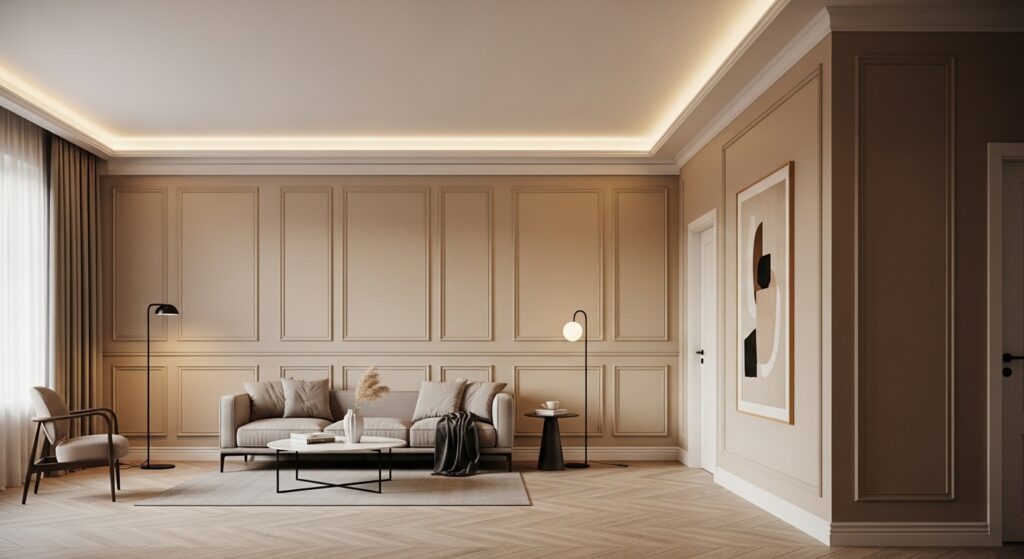
- Adds architectural depth to flat walls
- Makes the space feel custom and high-end
- Works with both modern and classic styles
- Creates a strong yet subtle focal point
Wall paneling has a quiet elegance that instantly upgrades any room. Instead of leaving walls plain, adding simple molding or panels creates depth and structure. I’ve noticed that even minimal furniture starts to feel more expensive when paired with detailed walls because the background itself becomes part of the design.
This idea works because it introduces texture without overwhelming the space. Soft, neutral tones keep it timeless while the paneling adds character and dimension. That’s why many designers use this trick to create a polished, finished look. It’s one of those Living Room Design Ideas that feels subtle at first but makes a lasting visual impact over time.
Low Profile Seating
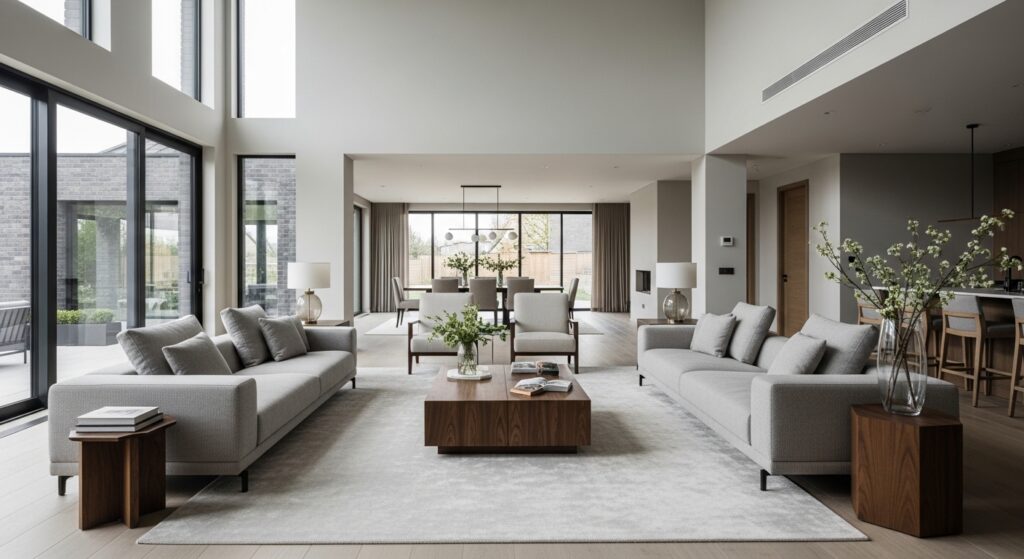
- Makes ceilings feel higher and space more open
- Creates a modern, relaxed atmosphere
- Keeps the room visually uncluttered
- Works well in both small and large areas
Low-profile furniture has a unique way of making a room feel more spacious and modern. By keeping seating closer to the ground, the vertical space above feels larger and more open. I’ve seen this work especially well in rooms where you want a clean, airy look without adding more decor.
This approach works because it shifts visual weight downward, allowing light and space to take center stage. It also pairs beautifully with large windows and simple layouts. Many contemporary interiors rely on this technique to create a calm and uncluttered environment. The result is a space that feels effortlessly stylish and comfortable at the same time.
Layered Lighting Scheme
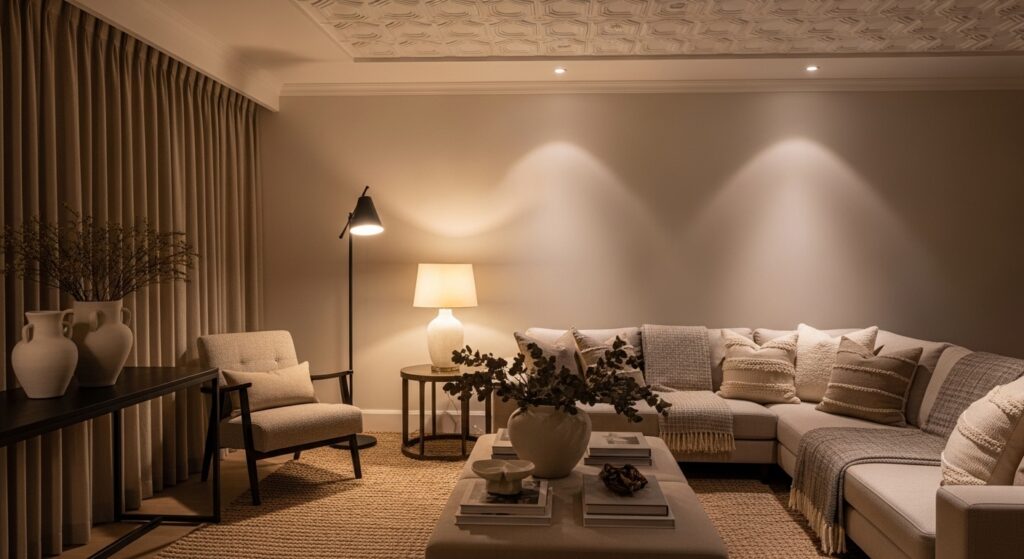
- Creates depth and mood throughout the room
- Allows flexibility for different times of day
- Highlights textures and design details
- Makes the space feel warm and inviting
Lighting can completely transform how a room feels, especially when it’s layered thoughtfully. Instead of relying on one overhead source, combining floor lamps, table lamps, and ambient lighting creates a balanced and inviting atmosphere. In my experience, this makes the space feel more lived-in and comfortable without sacrificing style.
This works because different light sources add dimension and highlight various elements in the room. Soft lighting can emphasize textures, while focused lighting draws attention to specific areas. That’s why many designers recommend layering light to create depth. The result is a room that feels dynamic, cozy, and visually rich at any time of day.
Curved Furniture Shapes
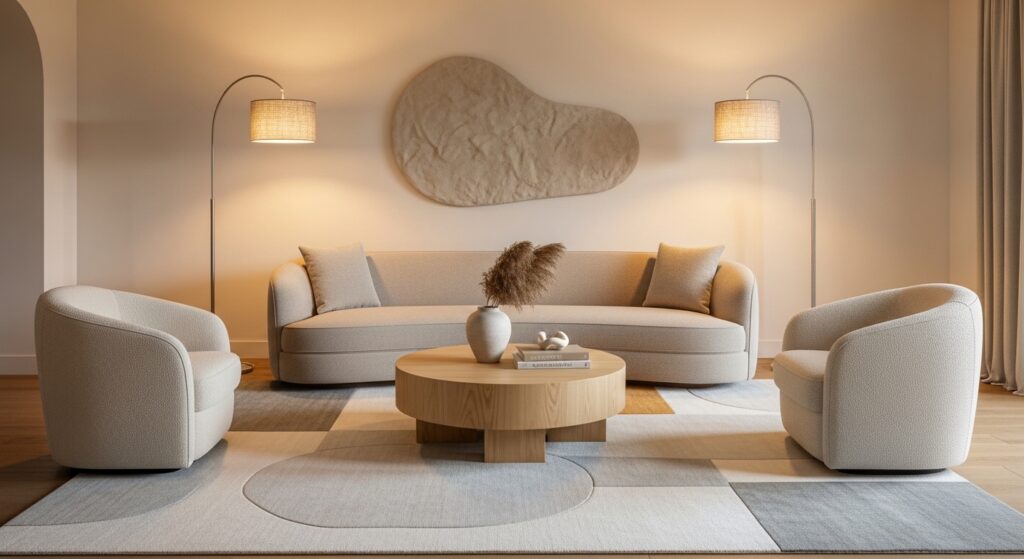
- Softens sharp lines in the room
- Adds a modern, high-end feel
- Creates better flow and movement
- Makes the space feel more inviting
Curved furniture brings a softness that instantly changes the mood of a room. Instead of rigid lines, rounded edges create a more relaxed and welcoming environment. I’ve noticed that even one curved piece can balance out a space filled with straight lines and make everything feel more harmonious.
This idea works because it introduces movement and visual flow. The eye naturally follows curved shapes, making the room feel more dynamic and less static. Designers often use this technique to break monotony and add subtle interest. The result is a space that feels modern, comfortable, and thoughtfully designed without trying too hard.
Monochrome Color Styling
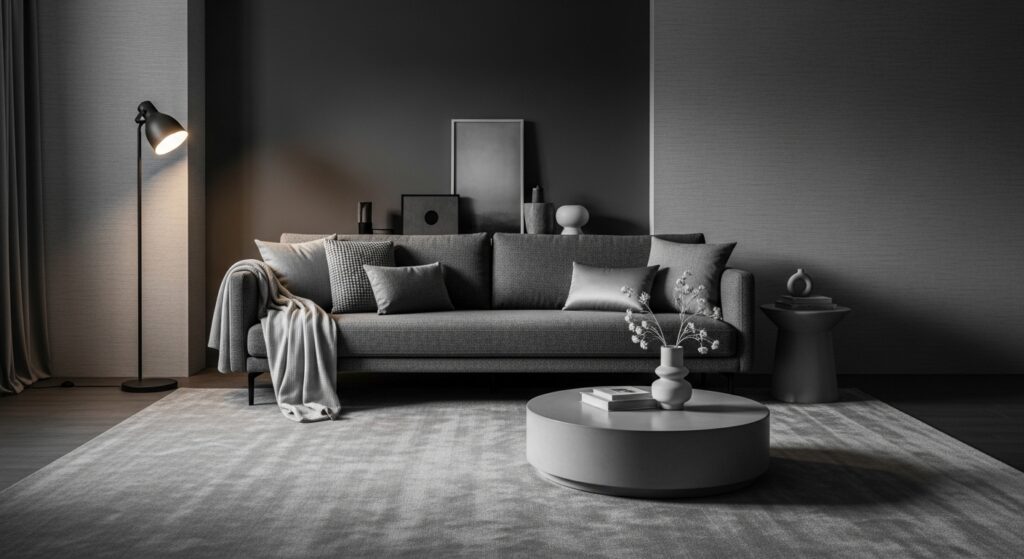
- Creates a cohesive and polished look
- Makes mixing textures easier
- Feels modern and sophisticated
- Reduces visual clutter
A monochrome palette has a clean and refined appeal that instantly elevates a space. By sticking to one color family, the room feels more cohesive and intentional. I’ve seen this work beautifully when different textures are layered within the same tone, adding depth without breaking the visual flow.
This approach works because it simplifies design decisions while still delivering a high-end result. Instead of focusing on multiple colors, attention shifts to materials, shapes, and finishes. Many designers recommend this for creating a calm yet impactful space. The result is a room that feels balanced, elegant, and effortlessly put together.
Floating Furniture Layout
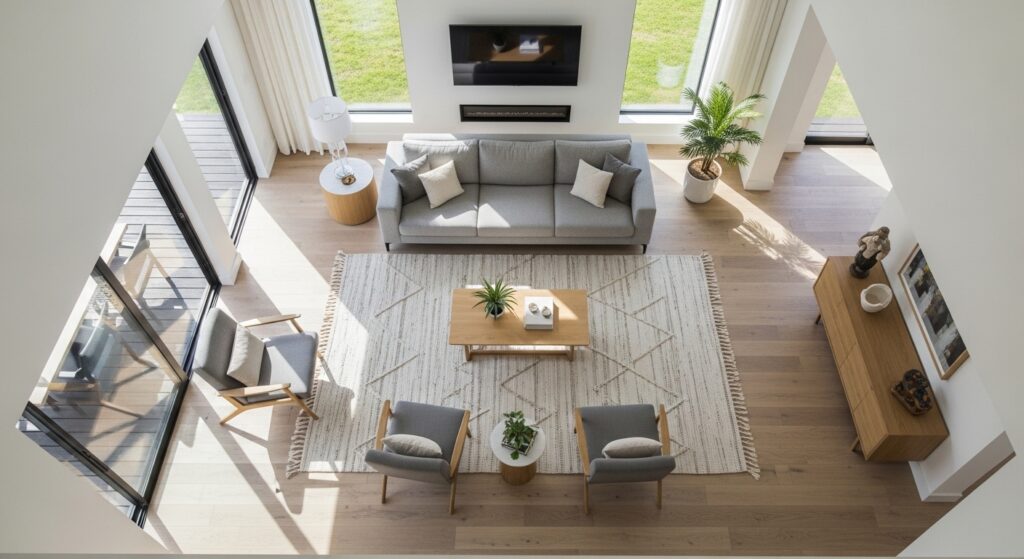
- Improves flow and movement in the room
- Makes the layout feel intentional
- Creates defined zones within the space
- Prevents walls from feeling crowded
Pulling furniture away from the walls can instantly make a room feel more thoughtfully designed. Instead of lining everything around the edges, floating key pieces creates a more dynamic layout. I’ve noticed that this approach makes even small rooms feel more open and balanced.
This works because it encourages better flow and creates natural zones for seating and conversation. It also allows space for decor elements behind or around furniture. Designers often use this technique to make layouts feel less rigid and more inviting. The result is a room that feels spacious, functional, and carefully arranged.
Glass And Metal Mix
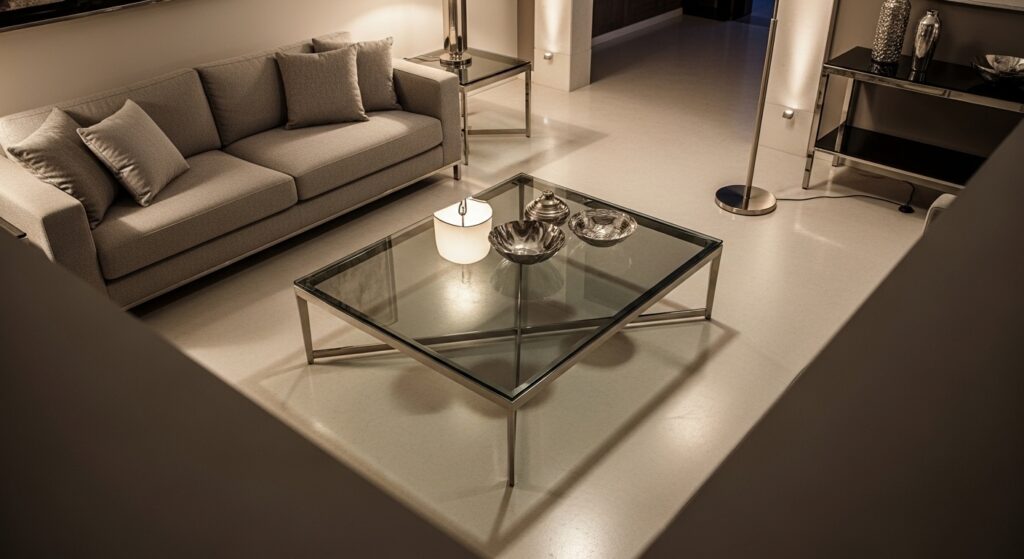
- Adds lightness and reflection to the space
- Makes furniture feel less bulky
- Enhances a modern, upscale look
- Pairs well with neutral palettes
Glass and metal elements bring a sleek, modern touch that instantly elevates a room. Transparent surfaces help keep the space feeling open, while metallic finishes add subtle shine. I’ve seen this combination work especially well in smaller rooms where heavy furniture can feel overwhelming.
This idea works because it balances visual weight and adds contrast without clutter. The reflective qualities of glass and metal also enhance lighting, making the room feel brighter. Many designers use this pairing to create a refined and contemporary look. The result is a space that feels clean, stylish, and effortlessly sophisticated.
Large Indoor Plants
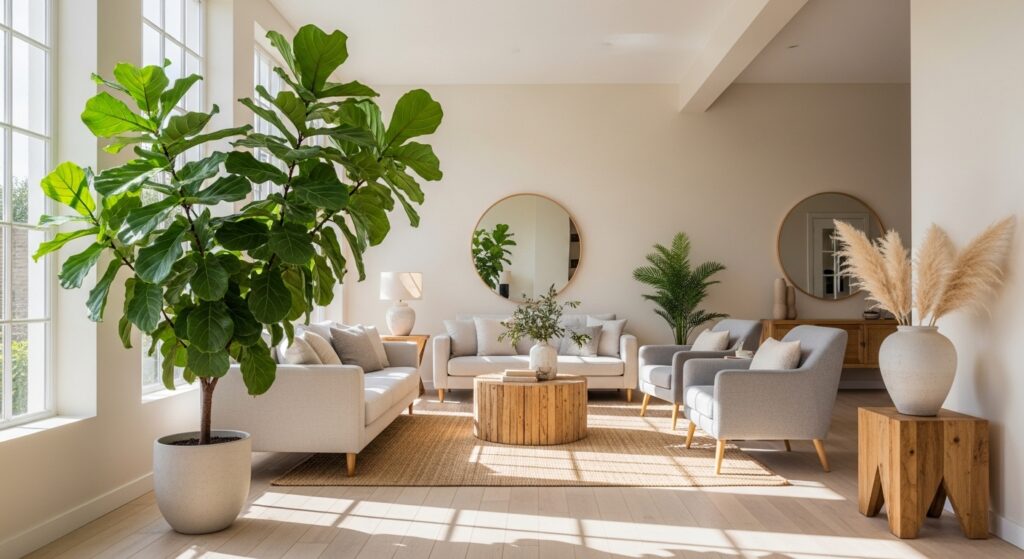
- Brings life and freshness into the room
- Adds height and visual interest
- Softens hard edges and corners
- Improves overall ambiance
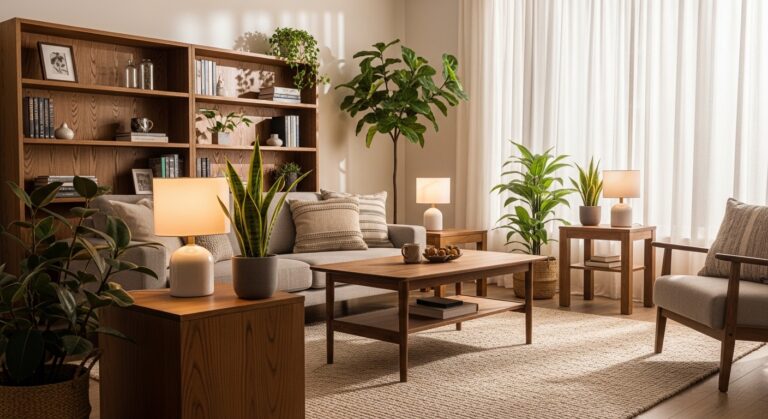
Large indoor plants can instantly make a space feel more vibrant and alive. Instead of relying only on decor, greenery adds a natural element that feels refreshing and calming. I’ve noticed that even one tall plant can transform an empty corner into a focal point.
This works because it introduces organic texture and color without overwhelming the design. Plants also pair beautifully with neutral palettes and natural materials. That’s why many designers include greenery as a finishing touch. The result is a room that feels balanced, lively, and more connected to nature.
Framed Minimal Artwork Grid
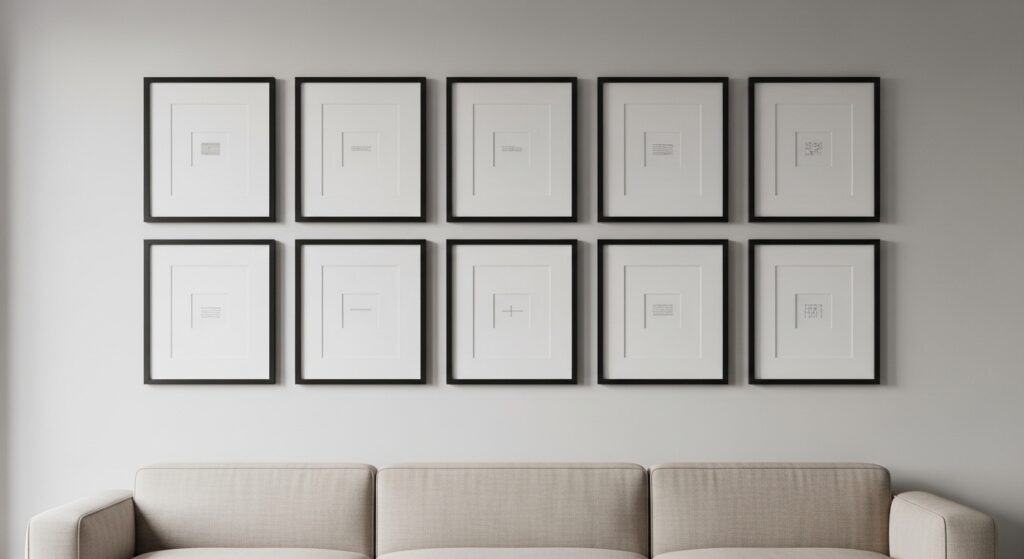
- Creates a structured and artistic display
- Adds personality without clutter
- Works well in modern interiors
- Keeps walls visually organized
A grid of minimal artwork offers a clean and structured way to decorate walls. Instead of random placement, the uniform layout creates balance and order. I’ve seen this work especially well in modern spaces where simplicity is key but personality is still important.
This idea works because it combines repetition with subtle variation. Each piece contributes to the overall design without overwhelming the eye. Designers often use grids to create a gallery feel while maintaining control and symmetry. The result is a wall that feels curated, intentional, and visually satisfying.
Soft Ambient Color Lighting
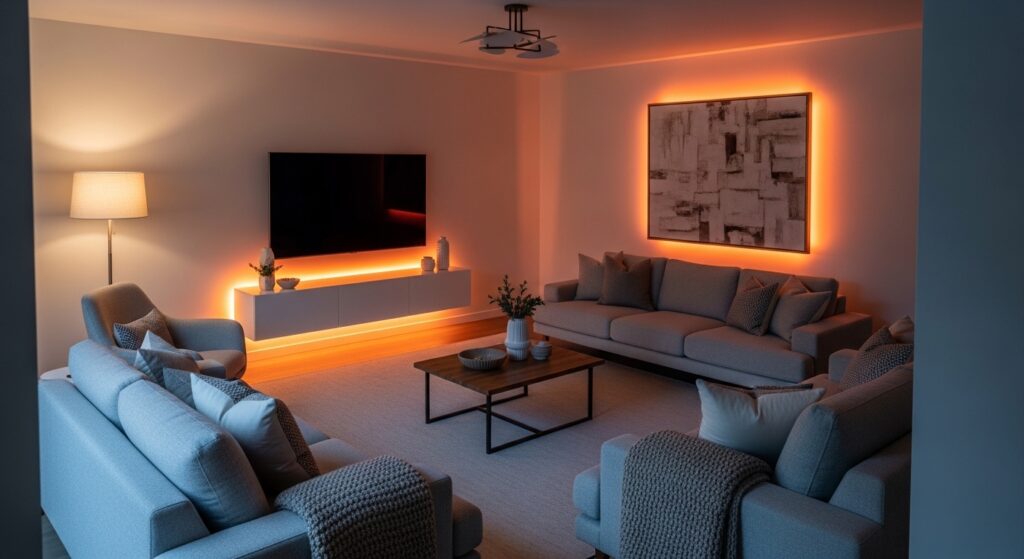
- Enhances mood and atmosphere instantly
- Adds a modern, cozy feel
- Highlights architectural features
- Works well for evening settings
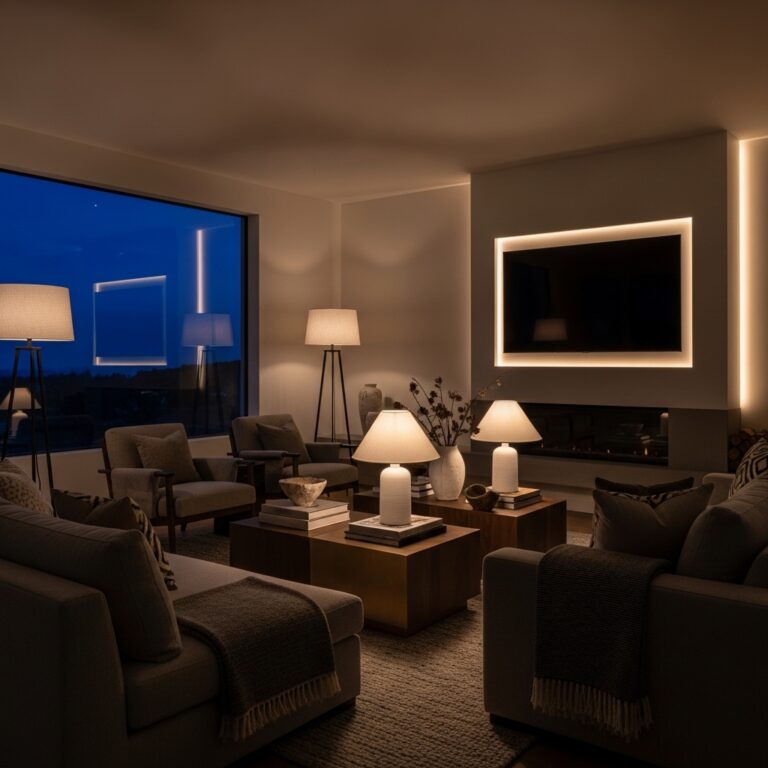
Ambient lighting with soft color tones can completely change how a room feels at night. Instead of relying only on bright lights, subtle glows create a relaxing and inviting environment. In my experience, this makes the space feel more comfortable and visually layered.
This works because it adds depth without overpowering the design. Soft lighting highlights textures and creates gentle contrasts throughout the room. Many designers recommend using ambient lighting to enhance mood and atmosphere. The result is a space that feels warm, modern, and perfect for unwinding after a long day.
Creating a space that looks expensive doesn’t have to be complicated or overwhelming. With the right Living Room Design Ideas, even small changes can make a big visual impact and completely transform how your home feels.
Start with one idea that speaks to you, then build from there. I’ve seen how simple upgrades—like better lighting or thoughtful styling—can instantly elevate a room without major effort. Save this post on Pinterest so you can come back to it anytime, try a few ideas in your own space, and share it with someone who’s ready to refresh their home too.