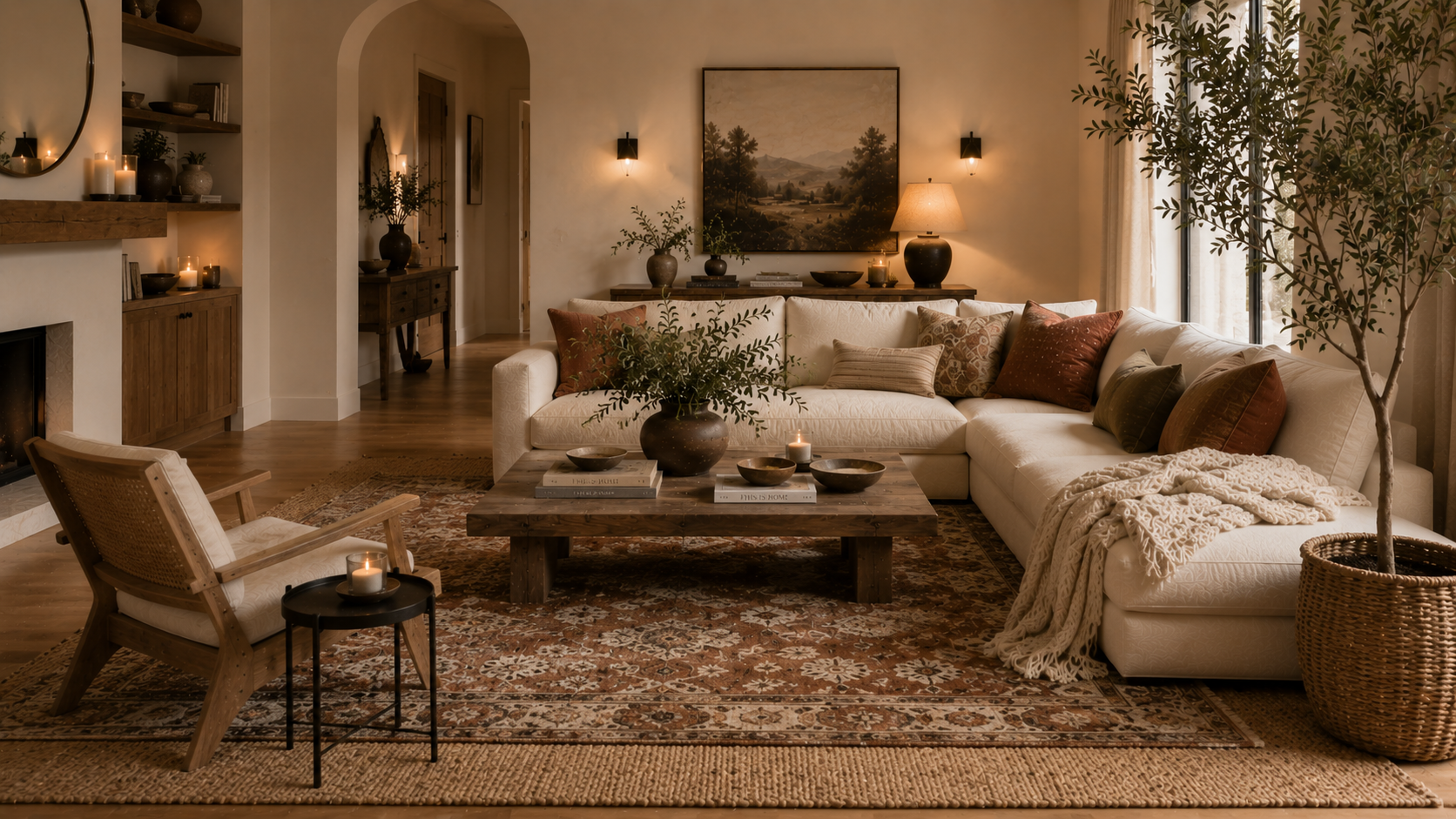
22 Living Room Design Ideas For A Dream Makeover
Your living room should feel warm, beautiful, and impossible to leave. These Living Room Design Ideas are perfect if your space feels outdated, empty, or simply missing that cozy designer touch. Sometimes even a few small changes can completely shift the mood of a room and make it feel brighter, calmer, and more inviting.
This article is filled with visually inspiring ideas that help transform ordinary spaces into stylish and comfortable living areas without needing a massive renovation budget. From layered lighting and soft earthy tones to statement walls and cozy reading corners, every idea focuses on practical upgrades that make a real difference in everyday homes. In my experience, the most beautiful rooms are not always the most expensive ones. I’ve noticed that thoughtful textures, warm lighting, and balanced layouts often create the biggest transformation. Whether you love modern, cozy, minimalist, or organic interiors, these ideas will help you create a space that feels personal, welcoming, and Pinterest-worthy.
Warm Neutral Layers
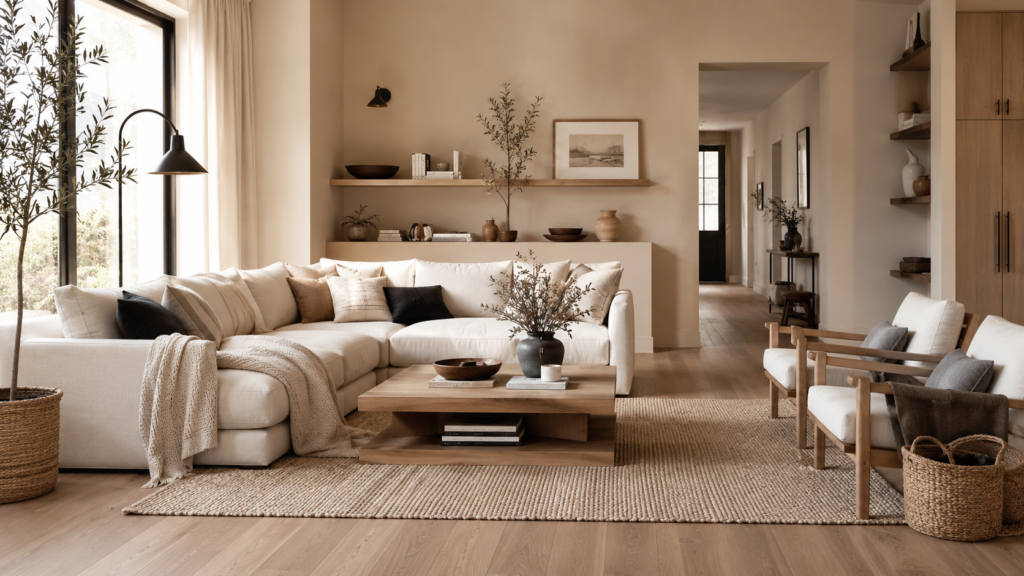
- Creates a calm and welcoming atmosphere without feeling boring
- Makes smaller spaces appear brighter and more open
- Adds texture and warmth through simple layered materials
- Easy to refresh seasonally without replacing major furniture
Soft beige tones can completely calm a busy room while still making it feel elegant and polished. Layering creamy fabrics, textured throws, pale wood finishes, and warm white walls creates a relaxed atmosphere that feels welcoming throughout the day. In my experience, this approach works especially well in homes with limited natural light because the softer shades gently reflect brightness instead of absorbing it. A neutral setup also gives you flexibility to change seasonal decor without replacing major furniture pieces. Even small additions like linen cushions or woven baskets can make the space feel professionally styled and thoughtfully balanced.
One simple color shift can make older interiors look far more expensive without starting a full renovation. Pairing warm neutrals with matte black accents, curved lamps, and soft layered rugs creates depth without overwhelming the room visually. I’ve noticed many homeowners struggle with spaces that feel cold or unfinished, especially after buying modern furniture too quickly. That is why many designers recommend adding texture before adding more color. A chunky knit throw, ribbed ceramic vase, or lightly distressed coffee table instantly softens hard lines and helps the entire area feel more comfortable, collected, and naturally inviting for everyday living.
Statement Ceiling Beams
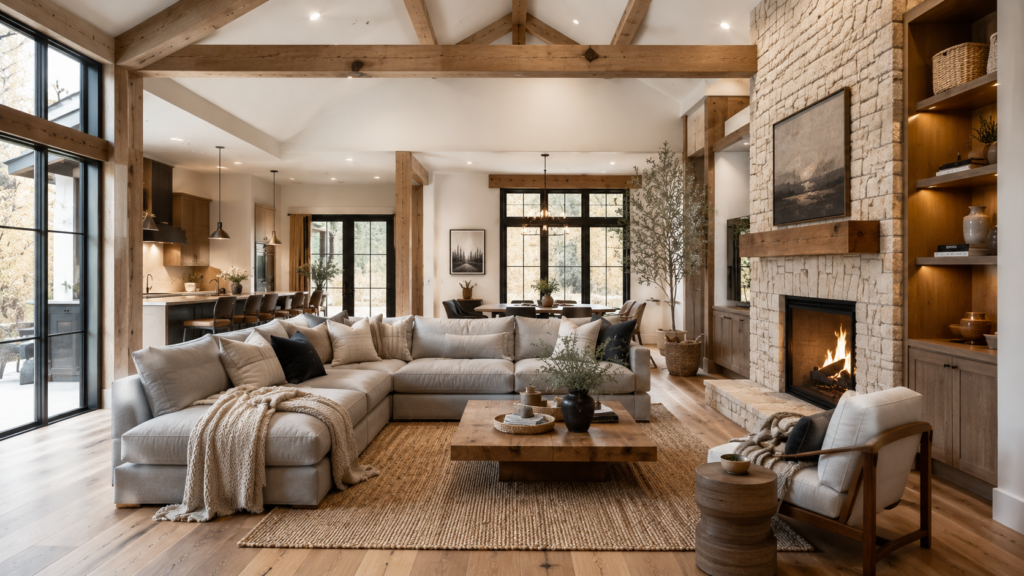
- Adds architectural character without overcrowding the room
- Makes ceilings feel taller and more visually interesting
- Blends rustic warmth with modern styling beautifully
- Helps open layouts feel more layered and complete
Ceiling details often change the entire personality of a room faster than people expect. Adding exposed wood beams creates height, warmth, and architectural interest even in simple spaces with basic furniture. I’ve seen this work well in many homes where the layout felt flat or visually empty before small structural accents were introduced. Dark walnut beams bring dramatic contrast, while lighter oak finishes keep the atmosphere calm and airy. This design choice naturally draws the eye upward, helping compact rooms appear larger and more layered without requiring expensive wall renovations or oversized decorative pieces everywhere.
A beautifully finished ceiling can also improve how lighting spreads throughout the space during both daytime and evening hours. Pairing rustic beams with recessed lighting, soft cream paint, and textured curtains creates a balanced mix between cozy farmhouse charm and clean modern styling. In my experience, homeowners often focus heavily on furniture while ignoring overhead details that influence the room’s overall mood. Even a few faux beams can create a custom-built appearance without major construction work. The added texture gives photographs more depth as well, which makes the entire setup especially appealing for Pinterest-inspired interiors.
Oversized Wall Art
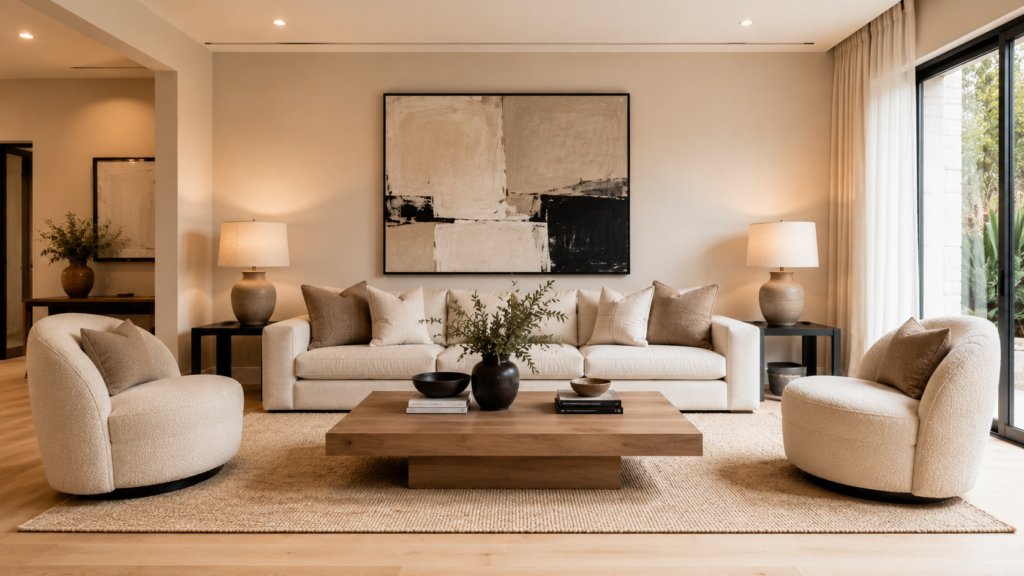
- Instantly creates a strong focal point in the room
- Makes the entire seating area feel more intentional
- Adds personality without creating visual clutter
- Works especially well in apartments and open layouts
Large-scale artwork instantly gives a room a designer feel without filling every corner with unnecessary decor. One oversized canvas above the sofa creates a strong focal point that helps the entire space feel organized and visually intentional. That’s why many designers recommend choosing one dramatic piece instead of several smaller frames competing for attention. Abstract prints, muted landscapes, or black-and-white photography work beautifully in both modern and classic interiors. I’ve noticed oversized pieces also help anchor open floor plans where furniture can otherwise feel disconnected. The result feels cleaner, calmer, and surprisingly luxurious even on a modest decorating budget.
An empty wall can quietly make a beautiful seating area feel unfinished no matter how stylish the furniture appears. Adding bold art introduces color, movement, and personality while making the arrangement underneath feel more complete. In my experience, choosing artwork with tones already found in pillows, rugs, or curtains creates the most balanced result without looking overly coordinated. Thin black frames, soft gallery lighting, and simple decor nearby keep the focus centered on the statement piece itself. This approach works especially well in apartments because it adds visual impact without taking up valuable floor space or creating clutter.
Curved Furniture Shapes
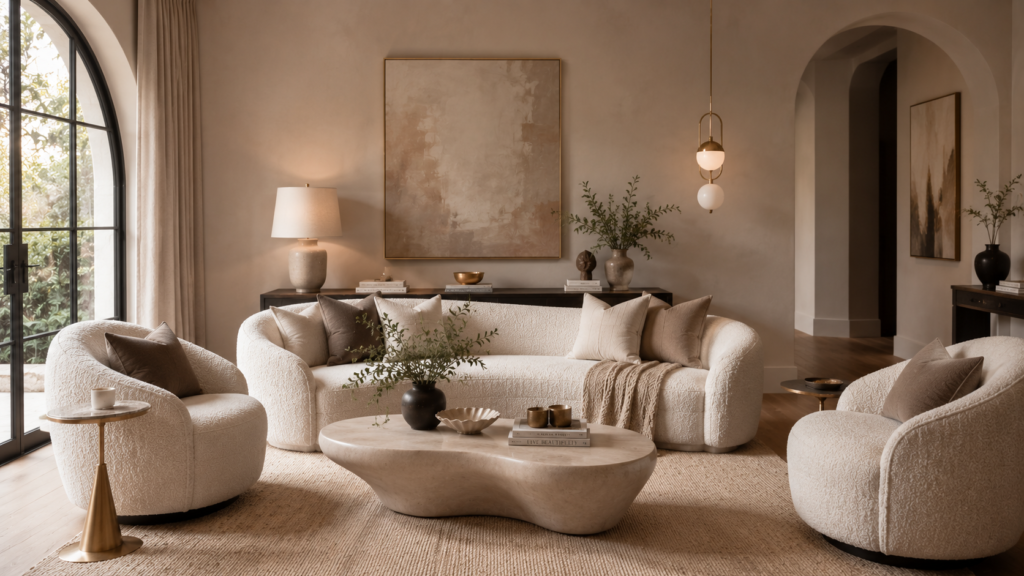
- Softens harsh lines in boxy rooms
- Creates a more relaxed and inviting atmosphere
- Makes modern spaces feel warmer and less rigid
- Helps seating arrangements feel naturally connected
Sharp corners can sometimes make a room feel stiff even when the decor itself looks beautiful. Curved sofas, rounded coffee tables, and soft-edged accent chairs instantly introduce a calmer visual flow that feels welcoming and comfortable. I’ve noticed this style works especially well in modern homes where straight architectural lines dominate the space. Rounded furniture naturally encourages conversation because the layout feels more connected and open. Even adding one curved piece can dramatically soften the overall appearance without requiring a complete redesign. The result feels elevated, stylish, and far more relaxing for everyday living and casual gatherings.
One reason this design trend continues growing is because curved silhouettes photograph beautifully from almost every angle. Soft edges reflect light differently and create movement that makes interiors feel more layered and luxurious. Pairing curved seating with textured rugs, warm wood finishes, and subtle lighting creates balance without overwhelming the room visually. In my experience, homeowners often underestimate how much furniture shape influences comfort and mood. A curved arrangement can make compact spaces feel less crowded while helping larger layouts appear more intimate. This approach blends especially well with neutral palettes and modern organic styling that remains timeless.
Floor To Ceiling Curtains
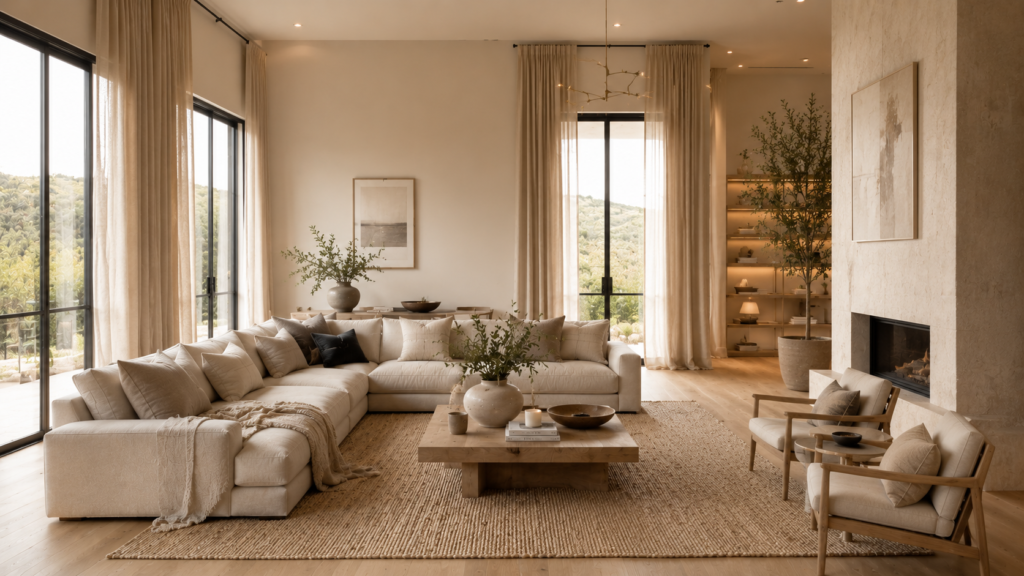
- Makes ceilings appear noticeably taller
- Adds softness and elegance to plain walls
- Helps windows feel larger and brighter
- Creates a polished designer-inspired finish
Long flowing curtains instantly make a room feel taller, softer, and more refined without changing the actual structure. Hanging curtain rods close to the ceiling rather than directly above the windows creates the illusion of extra height that transforms smaller spaces beautifully. I’ve seen this work especially well in apartments where ceilings feel visually low or cramped. Light linen fabrics allow natural sunlight to filter gently through the room while still adding texture and warmth. The overall effect feels relaxed yet sophisticated, helping even basic furniture arrangements appear more thoughtfully styled and professionally layered for everyday comfort.
Window treatments often become the finishing detail that finally pulls the entire room together visually. Choosing neutral drapes with soft folds adds movement and elegance while reducing the harsh appearance of bare walls or sharp window frames. That’s why many designers recommend investing in quality curtains before adding excessive decorative accessories. In my experience, heavier fabrics create a cozy atmosphere for larger rooms, while airy materials keep compact spaces feeling bright and open. Pairing floor-length curtains with warm lighting, natural textures, and clean furniture lines creates a balanced design that photographs beautifully for both Pinterest inspiration and real daily living.
Layered Lighting Corners
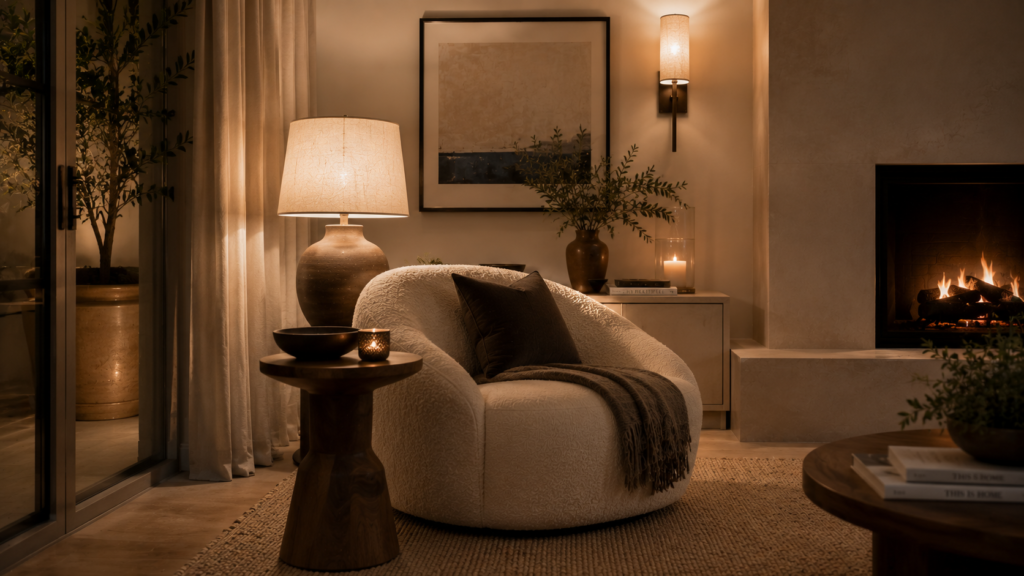
- Creates a cozy atmosphere during evenings
- Adds depth instead of relying on one harsh light source
- Makes the room feel warmer and more relaxing
- Highlights decorative details beautifully
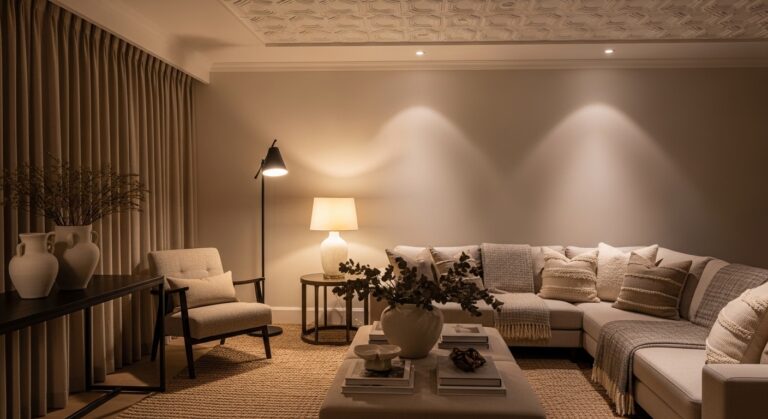
Lighting completely changes how a room feels after sunset, yet many homes still rely on one bright ceiling fixture alone. Layering floor lamps, table lamps, sconces, and soft accent lighting creates depth that instantly feels warmer and more inviting. I’ve noticed even beautifully decorated spaces can appear flat when the lighting lacks variety. Soft pools of light around seating areas make the room feel calmer and more comfortable for relaxing, reading, or entertaining guests. This setup also highlights textures like woven fabrics, wood finishes, and decorative objects that often disappear visually under harsh overhead lighting during evenings.
A thoughtfully lit corner can become the most loved area in the entire home without requiring major renovations or expensive furniture upgrades. Combining warm bulbs with dimmable lamps allows the atmosphere to shift naturally throughout the day depending on mood and activity. In my experience, lighting placed at different heights creates the most balanced result because it prevents dark empty areas from forming around the room. That’s why many designers recommend using at least three separate light sources in larger spaces. The layered glow adds comfort, softness, and a luxurious feeling that photographs beautifully in modern interiors.
Dark Accent Walls
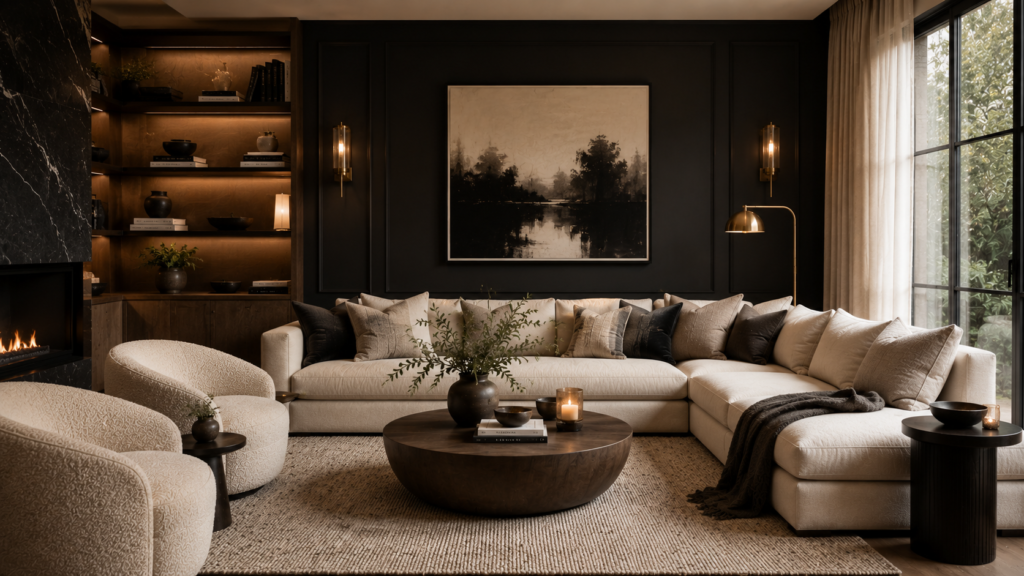
- Adds dramatic depth without overcrowding the room
- Makes lighter furniture stand out beautifully
- Creates a cozy and sophisticated atmosphere
- Works well with both modern and classic decor
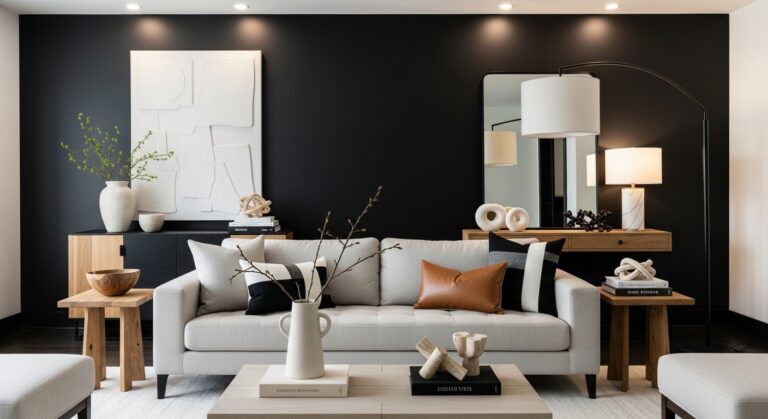
A dark accent wall can completely transform a simple room into a dramatic and stylish retreat without overwhelming the space. Deep charcoal, olive green, navy, or rich espresso shades create contrast that makes surrounding furniture and decor stand out more clearly. I’ve noticed darker walls often make large rooms feel warmer and more intimate, especially when balanced with soft textures and lighter fabrics nearby. This approach also works surprisingly well in smaller spaces because the darker tone adds depth rather than visual clutter. The result feels bold, cozy, and intentionally designed instead of plain or unfinished.
The key to making darker tones feel elegant instead of heavy is balancing them with warmth and texture throughout the room. Pairing rich wall colors with creamy upholstery, natural wood accents, warm lighting, and soft rugs creates a polished atmosphere that still feels welcoming. In my experience, matte paint finishes work best because they absorb light softly and create a more luxurious appearance. That’s why many designers recommend avoiding overly glossy surfaces for darker shades. Even one painted wall behind the sofa or fireplace can instantly add character while keeping the overall layout clean and visually balanced.
Minimalist Open Shelving
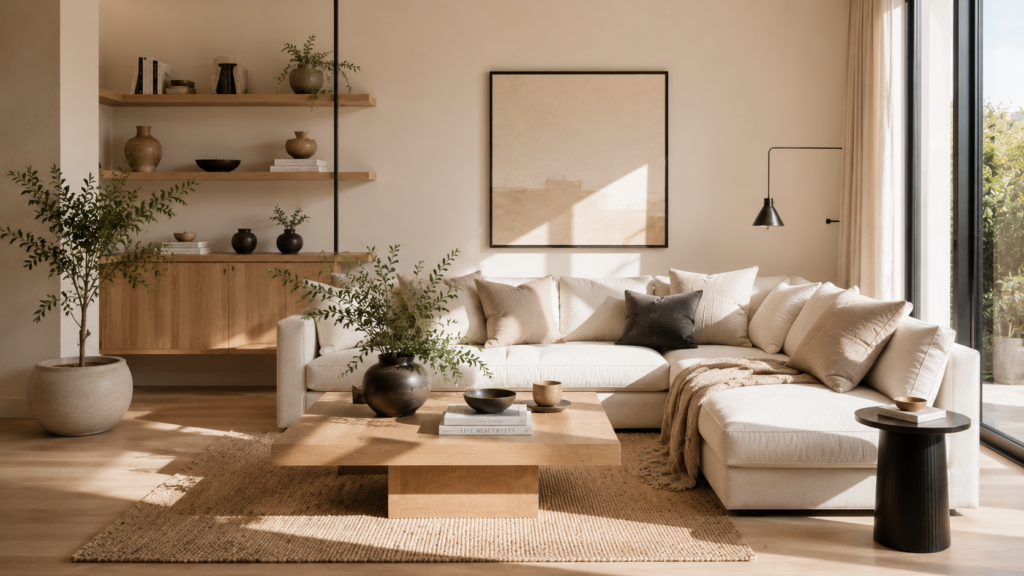
- Keeps decor organized without feeling crowded
- Adds personality through carefully chosen pieces
- Makes the room feel lighter and more open
- Easy to refresh with seasonal styling changes
Open shelving gives a living room personality while keeping the overall design feeling airy and uncluttered. Carefully styling shelves with books, ceramics, candles, and small decorative objects creates visual interest without overwhelming the space. I’ve noticed the most beautiful shelves usually contain fewer items than people expect because negative space helps every piece stand out more naturally. Light wood finishes and neutral decor work especially well for creating a calm modern atmosphere. This setup also allows homeowners to refresh the look seasonally by rotating smaller accessories instead of constantly purchasing large decorative furniture or expensive statement pieces.
One major advantage of minimalist shelving is how flexible it becomes as personal style changes over time. Simple floating shelves blend beautifully into modern, Scandinavian, farmhouse, and contemporary interiors without looking outdated too quickly. In my experience, combining decorative objects with practical storage creates the most balanced result because the shelves remain functional while still feeling curated. That’s why many designers recommend mixing books, baskets, greenery, and textured ceramics together rather than displaying identical items only. The layered arrangement adds warmth and personality while helping the room feel collected, lived-in, and visually balanced throughout the entire space.
Mixed Wood Textures
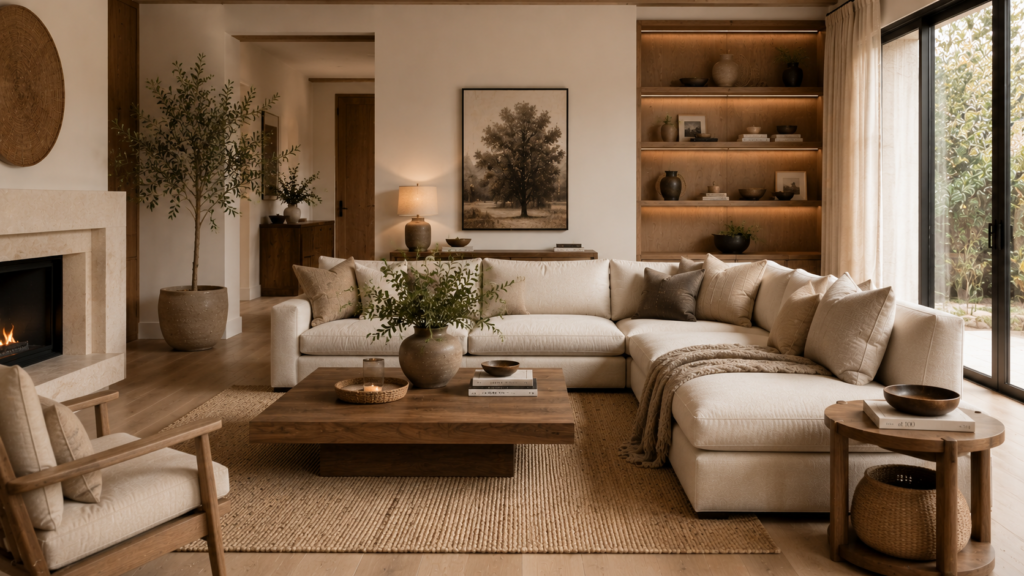
- Adds warmth without relying on bold colors
- Creates a layered and collected appearance
- Prevents matching furniture from feeling flat
- Brings natural texture into modern interiors
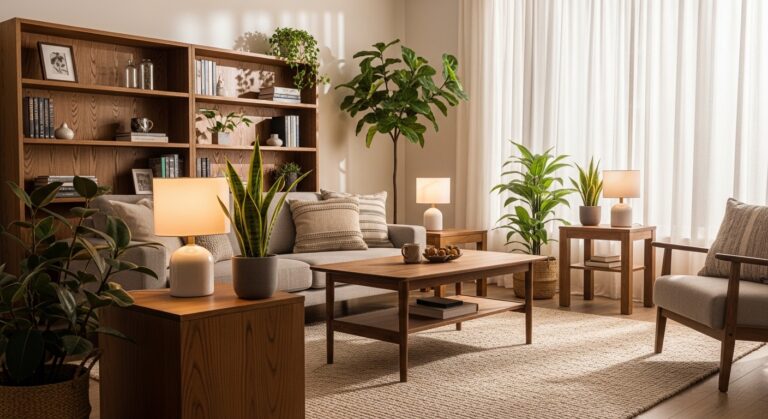
Using different wood tones in one room creates depth that feels natural, relaxed, and far more visually interesting than perfectly matching furniture sets. Combining walnut, oak, ash, or reclaimed wood finishes adds texture while helping the space feel layered over time instead of newly purchased all at once. I’ve seen this work well in many homes where identical furniture made the room feel flat or overly staged. The contrast between lighter and darker wood pieces also highlights architectural details more beautifully. Even small additions like wooden trays, shelves, or side tables can instantly warm up a modern interior.
Many homeowners worry mixed finishes will clash, but thoughtful balance usually creates a richer and more welcoming atmosphere. Keeping undertones similar while varying the depth of color helps the room feel cohesive without appearing overly coordinated. In my experience, neutral fabrics and soft lighting help tie different wood textures together naturally. That’s why many designers recommend starting with one dominant finish and layering smaller accents around it gradually. The combination of organic materials, textured surfaces, and warm tones creates a timeless look that feels comfortable, authentic, and easy to personalize for everyday family living and entertaining.
Cozy Reading Nooks
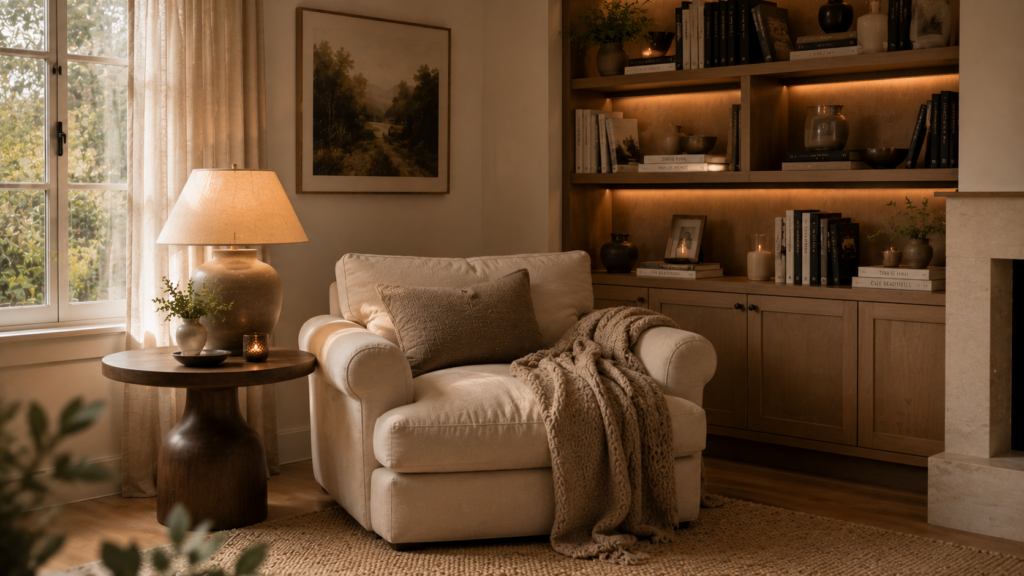
- Turns unused corners into functional spaces
- Encourages relaxation and quiet daily routines
- Adds warmth and personality to larger rooms
- Creates a cozy focal point without major renovations
A small reading corner can completely change how a living room feels by making it more personal, comfortable, and intentionally designed. Adding an oversized chair, soft throw blanket, side table, and warm lamp instantly creates a quiet retreat within the larger space. I’ve noticed unused corners often make rooms feel incomplete, especially in open layouts where empty areas become visually noticeable. A cozy nook fills that gap naturally while adding warmth and function at the same time. Even compact apartments can benefit from this setup because it creates a dedicated area for relaxing without requiring additional rooms.
The most inviting reading spaces usually combine soft textures, layered lighting, and calming colors that encourage people to slow down and unwind. Positioning the chair near natural light during daytime hours also helps the corner feel brighter and more welcoming throughout the day. In my experience, adding a small bookshelf or woven basket nearby makes the setup feel more practical and lived-in rather than overly decorative. That’s why many designers recommend styling these corners with items people genuinely use daily. The finished result feels warm, comforting, and beautifully suited for both modern and classic interiors alike.
Stone Fireplace Focus
- Creates a strong architectural focal point
- Adds texture and warmth to plain interiors
- Makes the seating area feel more connected
- Works beautifully in both rustic and modern homes
A stone fireplace naturally becomes the heart of a living room because it adds texture, warmth, and visual weight without relying on excessive decor. Whether using smooth limestone, stacked stone, or rustic finishes, the material instantly introduces character that feels timeless and grounded. I’ve noticed even modern spaces feel softer and more inviting once natural textures are added around the fireplace area. Positioning seating around this feature also improves the overall flow of the room by creating a clear gathering point. The finished setup feels comfortable, elegant, and designed for both entertaining guests and quiet evenings at home.
The beauty of stone surfaces comes from their ability to blend effortlessly with many different decorating styles and color palettes. Pairing textured fireplaces with neutral furniture, soft lighting, and organic materials creates balance while keeping the room visually calm. In my experience, oversized artwork or floating wood mantels above the fireplace help complete the arrangement without making it feel overcrowded. That’s why many designers recommend keeping nearby accessories minimal so the texture itself remains the main focus. The result feels warm, luxurious, and naturally sophisticated while still remaining practical for everyday family living and relaxation.
Indoor Greenery Styling
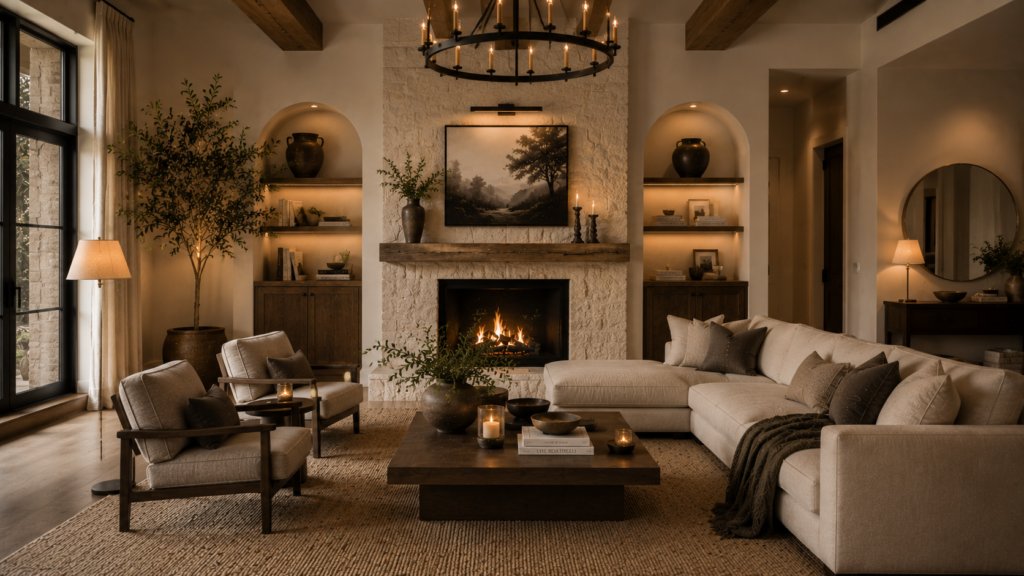
- Brings life and freshness into the room
- Softens modern interiors with natural texture
- Improves the feeling of warmth and comfort
- Makes empty corners feel intentional and styled
Indoor plants instantly make living spaces feel fresher, calmer, and more connected to nature without requiring expensive design changes. Large greenery beside sofas, windows, or empty corners introduces softness that balances hard furniture lines beautifully. I’ve seen this work especially well in modern homes where neutral palettes sometimes feel too flat or sterile alone. Olive trees, fiddle leaf figs, and trailing plants add movement while helping the room feel more relaxed and lived-in. Even one oversized plant can completely transform an unused corner into a styled focal point that feels bright, welcoming, and visually balanced.
The key to successful greenery styling is choosing plants that complement the room rather than overpowering it visually. Woven baskets, ceramic planters, and natural wood accents help greenery blend seamlessly into modern and organic interiors. In my experience, placing plants near natural light sources creates the healthiest growth while also improving how the room photographs during daytime hours. That’s why many designers recommend using varying plant heights throughout larger spaces for better visual flow. The layered greenery adds warmth, texture, and a refreshing atmosphere that instantly makes interiors feel more inviting and beautifully finished.
Boucle Texture Accents
- Adds softness and warmth without bold patterns
- Makes modern interiors feel more comfortable
- Creates a cozy high-end designer appearance
- Works beautifully with neutral color palettes
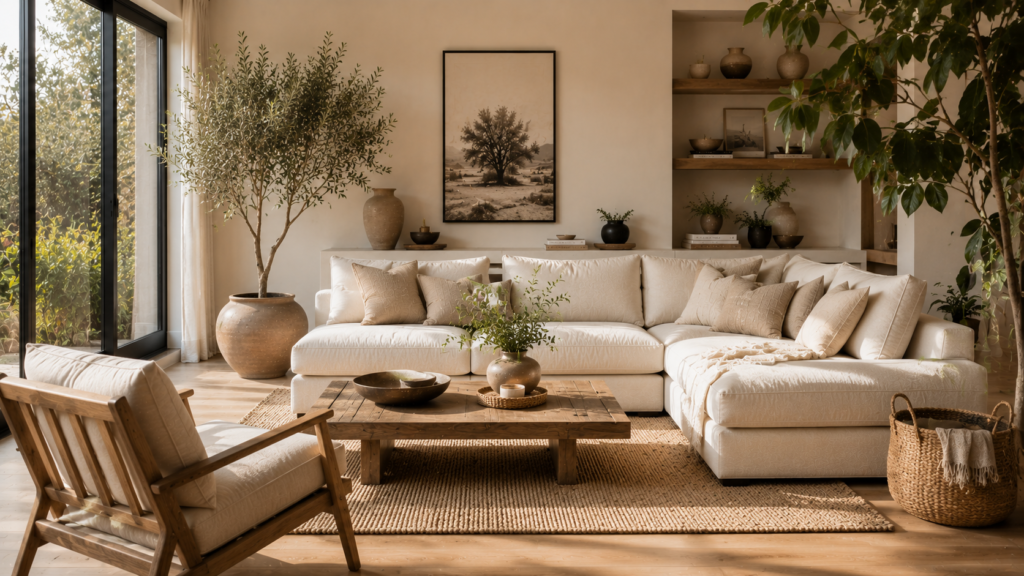
Boucle fabric instantly gives a living room a softer and more luxurious appearance without relying on bright colors or heavy decoration. Its textured surface adds warmth that makes modern furniture feel more inviting and comfortable for daily use. I’ve noticed boucle works especially well in neutral spaces because the texture itself becomes part of the visual interest. Accent chairs, ottomans, and throw pillows upholstered in boucle can completely soften sharp modern lines. Even a small boucle piece creates a layered designer-inspired look that feels elegant, cozy, and naturally styled without making the room appear cluttered or overly trendy.
One reason this texture remains popular is because it blends beautifully with many different decorating styles while still feeling timeless. Pairing boucle seating with warm wood tones, linen fabrics, and soft lighting creates balance that feels calm and sophisticated. In my experience, homeowners often underestimate how much tactile texture influences the comfort of a room visually. That’s why many designers recommend mixing smooth surfaces with textured fabrics to avoid flat-looking interiors. The cozy layered effect photographs beautifully for Pinterest-inspired spaces while still remaining practical and comfortable enough for real everyday living and entertaining.
Floating Media Walls
- Keeps the room looking clean and organized
- Makes smaller spaces feel less crowded
- Adds modern architectural interest effortlessly
- Creates hidden storage without bulky furniture
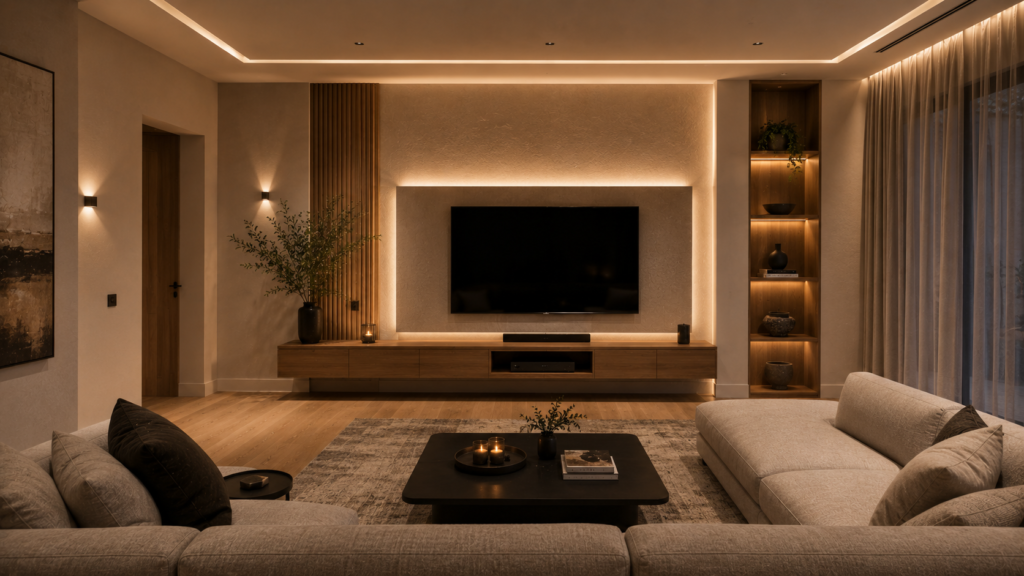
A floating media wall instantly makes a living room feel cleaner, sleeker, and more thoughtfully designed without requiring major renovations. Wall-mounted consoles paired with hidden storage help reduce visual clutter while keeping everyday items organized and accessible. I’ve seen this work especially well in smaller homes where bulky entertainment units make the space feel cramped and heavy. Adding soft LED lighting beneath floating shelves also creates a warm glow that improves the room’s atmosphere during evenings. The overall setup feels modern and polished while still remaining practical for daily family use and casual entertaining.
One of the biggest advantages of floating furniture is how it visually opens the floor area beneath it. This small design detail helps the room appear larger and more spacious, especially when paired with lighter flooring and minimal decor. In my experience, combining wood textures with matte finishes creates the most balanced result because it prevents the wall from feeling overly cold or industrial. That’s why many designers recommend keeping nearby accessories simple and intentional. The finished arrangement creates a calm, uncluttered appearance that photographs beautifully while still supporting comfortable real-life functionality every single day.
Black Frame Windows
- Creates sharp contrast in soft neutral rooms
- Makes natural light feel more dramatic
- Adds modern architectural character instantly
- Works with farmhouse, industrial, and modern styles
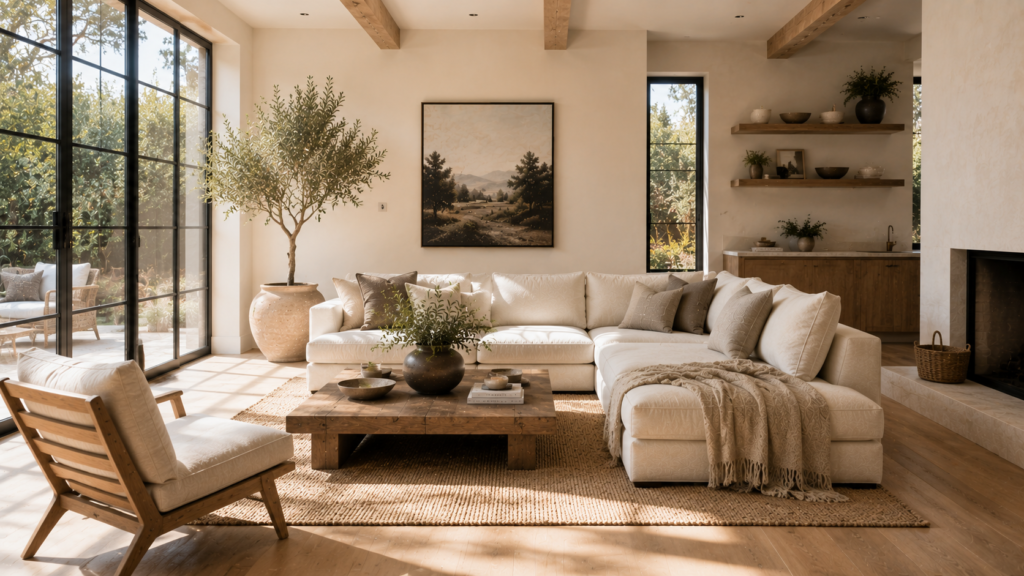
Black-framed windows instantly add structure and contrast that makes a room feel more custom and architecturally refined. The dark lines naturally frame outdoor views while helping soft neutral interiors feel more balanced and visually grounded. I’ve noticed this detail works especially well in bright spaces where large windows already bring in generous natural light. Even simple white walls and beige furniture appear more elevated once bold window framing is introduced. The result feels modern and intentional without requiring dramatic color changes or excessive decorative styling throughout the rest of the room.
One reason this feature photographs so beautifully is because the contrast creates clean visual definition in both daytime and evening lighting. Pairing black window frames with warm woods, linen fabrics, and textured rugs softens the sharp edges while maintaining a sophisticated appearance. In my experience, this combination works across many design styles because the windows act like timeless architectural accents rather than temporary trends. That’s why many designers recommend repeating small black details throughout the room for balance. The layered contrast gives interiors a polished atmosphere that feels stylish, airy, and naturally connected to outdoor surroundings.
Soft Earthy Palettes
- Creates a calm and grounded atmosphere
- Adds warmth without overwhelming the space
- Makes rooms feel cozy year-round
- Blends beautifully with natural materials and textures
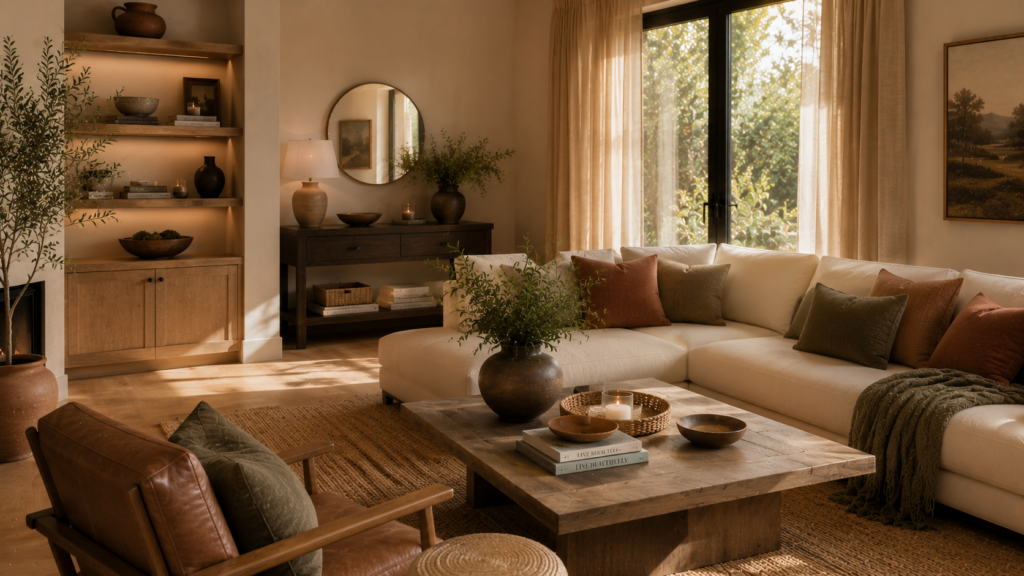
Earthy colors bring warmth and comfort into a living room while still keeping the overall design calm and timeless. Shades like terracotta, olive green, clay, sand, and warm brown create a grounded atmosphere that feels relaxing throughout every season. I’ve seen this work well in many homes where cooler gray palettes started feeling too cold or impersonal over time. Earth-inspired tones also blend beautifully with wood textures, woven materials, and natural fabrics. Even small additions like cushions, curtains, or ceramic decor can instantly soften the room and create a more welcoming everyday environment.
The beauty of earthy palettes comes from how adaptable they feel in both modern and traditional interiors. Pairing warm tones with layered lighting and organic textures creates a balanced atmosphere that never feels overly styled or artificial. In my experience, these shades photograph especially well because they reflect natural light softly instead of creating harsh contrast. That’s why many designers recommend earthy colors for rooms meant to feel calm and lived-in. The finished result creates warmth, personality, and visual depth while still allowing the space to remain airy, comfortable, and easy to refresh seasonally.
Glass Coffee Tables
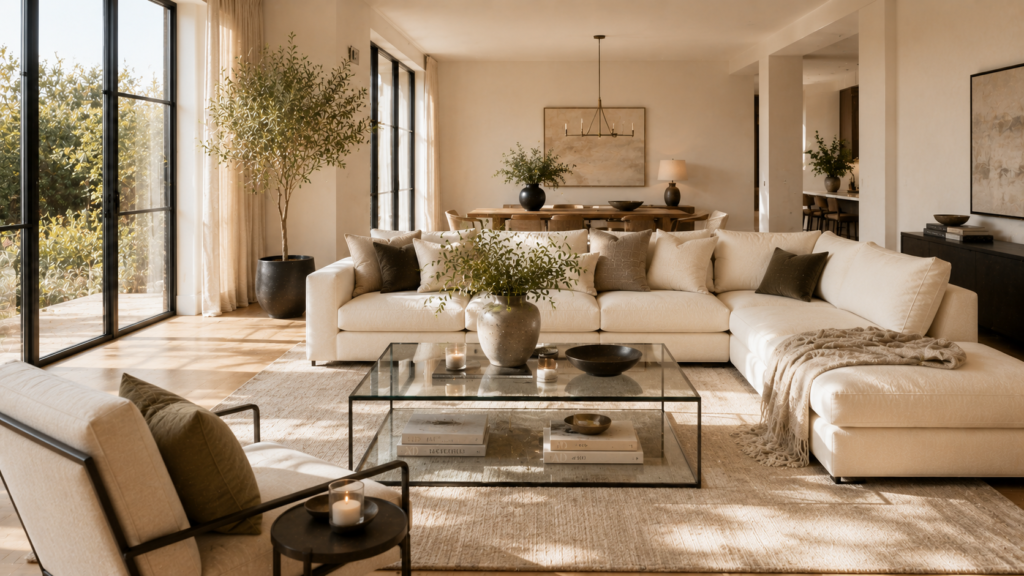
- Makes compact rooms feel more open
- Keeps the layout visually light and airy
- Blends easily with many decorating styles
- Reflects light beautifully throughout the space
Glass coffee tables create openness that instantly helps smaller living rooms feel brighter and less crowded. Because the transparent surface allows flooring and rugs to remain visible underneath, the room feels visually lighter without sacrificing functionality. I’ve noticed this design works especially well in apartments or narrow layouts where bulky furniture can quickly overwhelm the space. Pairing glass surfaces with soft textiles and warm wood accents keeps the overall atmosphere balanced instead of overly modern or cold. The result feels elegant, spacious, and clean while still remaining practical for everyday use and casual gatherings.
One major advantage of glass furniture is how effortlessly it blends into many different decorating styles and color palettes. Whether paired with minimalist interiors, modern organic decor, or classic neutral spaces, the transparent design quietly complements surrounding textures without competing visually. In my experience, rounded glass tables often feel softer and safer in family homes because they reduce harsh corners while improving movement around seating areas. That’s why many designers recommend them for compact layouts needing better flow. The reflective surface also enhances natural light, helping the entire room feel brighter and more expansive throughout the day.
Layered Area Rugs
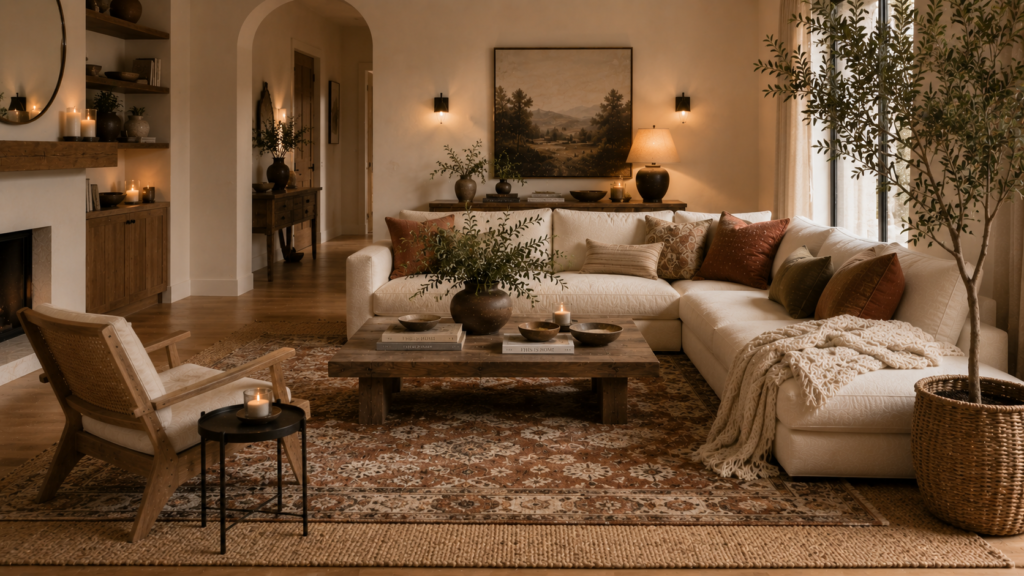
- Adds texture and depth to plain flooring
- Makes seating areas feel more defined
- Brings warmth into large open spaces
- Helps rooms feel softer and more comfortable
Layering rugs instantly adds warmth and dimension that makes a living room feel more thoughtfully styled and comfortable. Placing a smaller patterned rug over a larger neutral base creates texture while helping define the seating area more clearly. I’ve noticed this technique works especially well in open-concept homes where furniture arrangements sometimes feel disconnected from the rest of the space. Natural jute, wool, and soft woven textures combine beautifully to create a relaxed designer-inspired atmosphere. Even older flooring can appear more polished once layered rugs soften the room and introduce visual depth throughout the layout.
One reason layered rugs remain popular is because they make spaces feel collected over time rather than perfectly staged all at once. Combining different textures and subtle patterns introduces personality while still keeping the room visually balanced. In my experience, larger neutral base rugs help smaller decorative rugs feel intentional instead of floating awkwardly beneath furniture. That’s why many designers recommend layering when a single rug feels too small for the layout. The added texture creates comfort underfoot while helping the room feel warmer, cozier, and far more inviting for both everyday living and entertaining guests.
Built In Shelving
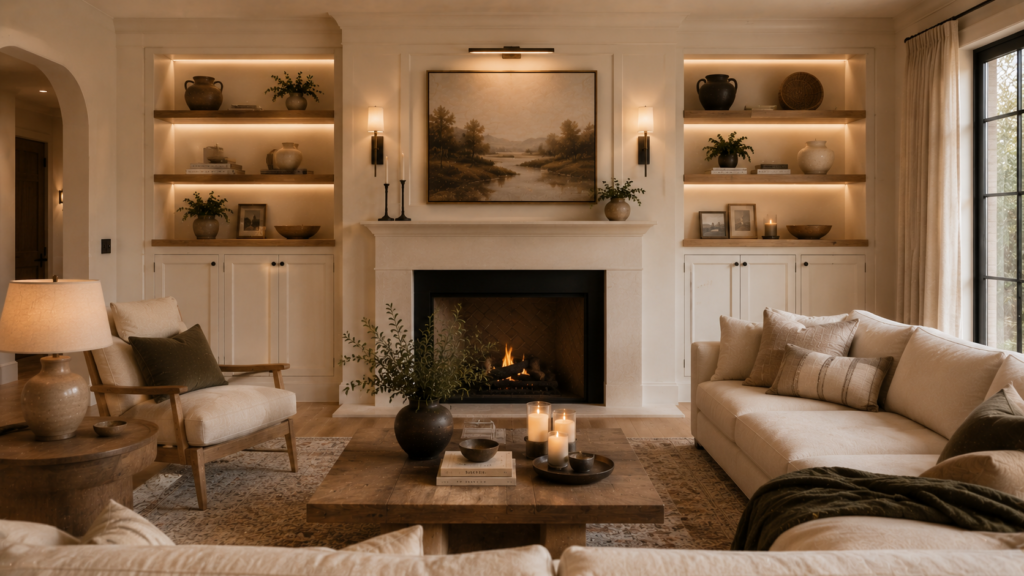
- Adds storage without sacrificing style
- Makes the room feel custom and polished
- Creates balance around fireplaces or televisions
- Helps organize decor beautifully and practically
Built-in shelving gives a living room a polished custom appearance while adding practical storage that keeps the space organized and functional. Framing fireplaces or televisions with shelves instantly creates symmetry that helps the entire layout feel more intentional and balanced. I’ve seen this work especially well in family homes where clutter quickly builds up around entertainment areas. Books, baskets, ceramics, and decorative accents can all be displayed neatly without overcrowding the room visually. The finished result feels elegant and structured while still allowing homeowners to personalize the space with meaningful everyday items and decor.
One reason built-ins feel so timeless is because they blend seamlessly into the architecture instead of looking like separate furniture pieces. Painted cabinetry paired with wood shelving creates warmth while still maintaining a clean and cohesive appearance. In my experience, mixing open shelving with closed storage provides the most functional setup because it hides less attractive items while showcasing decorative details beautifully. That’s why many designers recommend keeping shelf styling simple and layered rather than overly filled. The balanced arrangement creates a calm atmosphere that feels organized, welcoming, and naturally suited for everyday family living.
Moody Evening Lighting
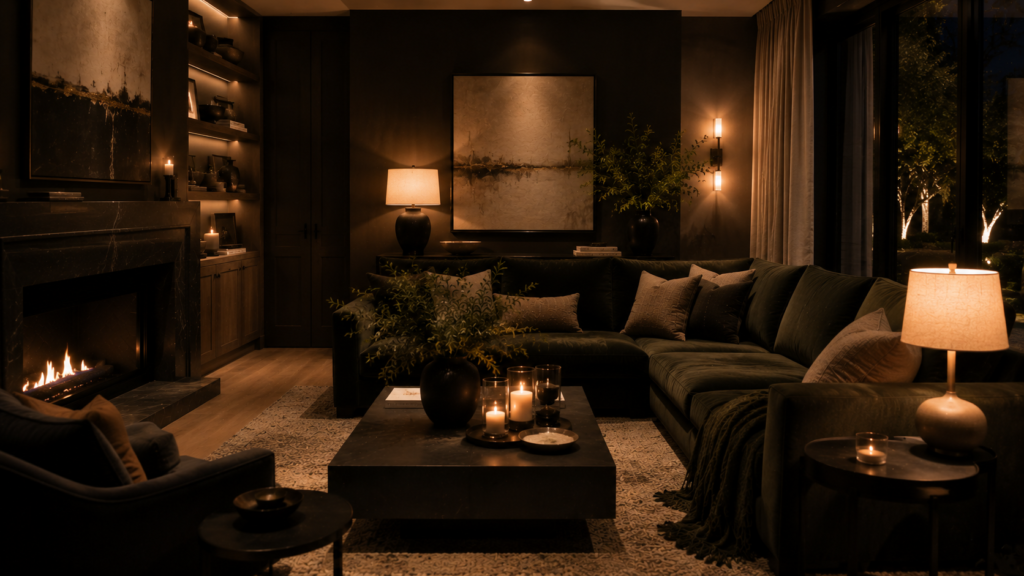
- Creates a relaxing nighttime atmosphere
- Makes the room feel warmer and more luxurious
- Highlights textures and decorative details beautifully
- Reduces harsh brightness from overhead lights
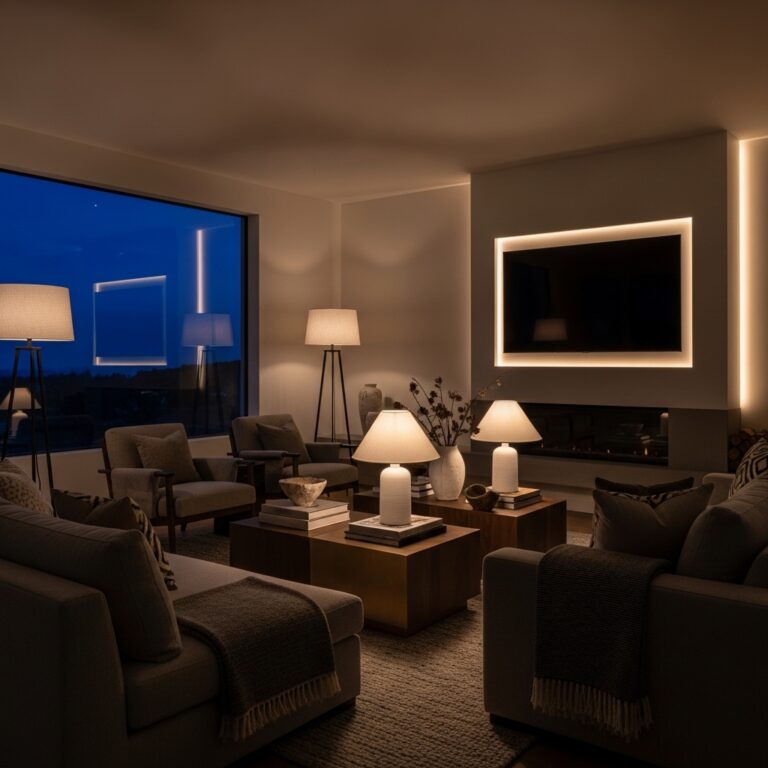
The right evening lighting can completely transform how a living room feels after sunset by creating warmth, comfort, and softness throughout the space. Instead of relying on one bright ceiling fixture, layered lamps and warm ambient lighting create a calm atmosphere that encourages relaxation. I’ve noticed rooms instantly feel more expensive and inviting once harsh white lighting is replaced with softer golden tones. Candles, dimmable lamps, and hidden accent lights also highlight textures like velvet, wood, and woven fabrics more beautifully. The overall environment becomes cozy, intimate, and perfectly suited for quiet evenings or entertaining guests.
Moody lighting works especially well in modern interiors where clean lines sometimes need extra warmth to avoid feeling cold or overly minimal. Positioning lamps at different heights creates balanced shadows that add depth without darkening the room too heavily. In my experience, warm bulbs around seating areas make spaces feel significantly more comfortable for reading, conversations, or unwinding at night. That’s why many designers recommend avoiding overly bright cool-toned lighting in relaxation spaces. The softer glow creates a luxurious atmosphere while helping decorative details stand out naturally and making the room feel visually layered and complete.
Arched Decor Details
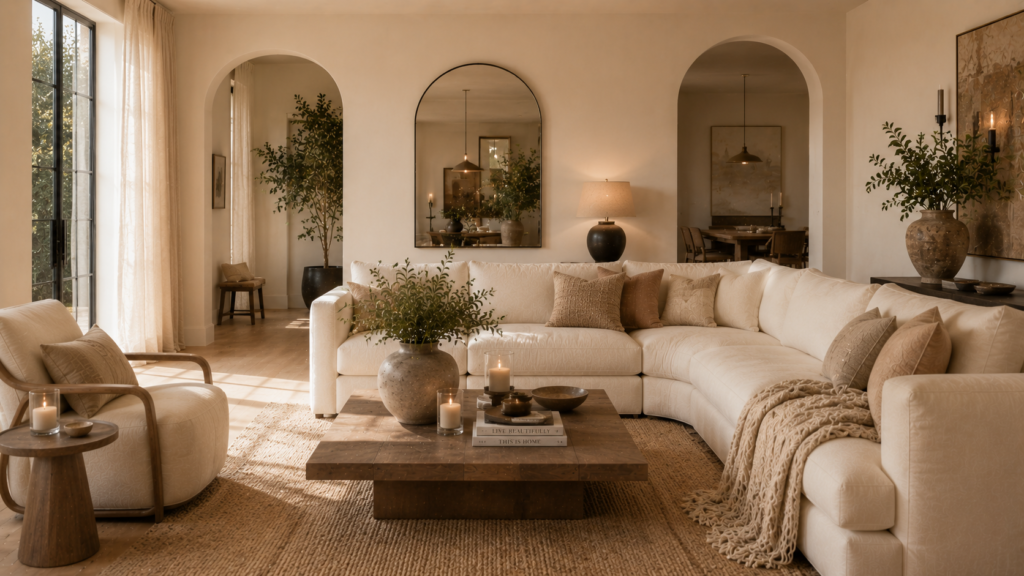
- Softens boxy layouts and sharp furniture lines
- Adds subtle architectural character effortlessly
- Creates elegant visual flow throughout the room
- Makes modern interiors feel warmer and softer
Arched details instantly soften a living room by introducing gentle curves that balance sharp furniture lines and structured layouts. Mirrors, doorways, shelving, and decorative accents with rounded shapes create movement that feels elegant and calming without overwhelming the space. I’ve noticed arches work especially well in modern homes where straight edges dominate nearly every surface. Even one curved mirror above a console or fireplace can dramatically change the room’s atmosphere. The softer shapes help interiors feel more welcoming and naturally styled while still maintaining a clean and contemporary appearance throughout the entire layout.
One reason arched decor continues trending is because it adds timeless architectural charm without requiring major renovations or structural changes. Pairing curved details with warm neutrals, layered textiles, and natural wood tones creates balance that feels sophisticated yet comfortable. In my experience, repeating soft curves subtly throughout the room creates the most cohesive result because the design feels intentional instead of random. That’s why many designers recommend introducing arches gradually through decor before committing to larger architectural updates. The final look feels airy, refined, and beautifully suited for both minimalist and cozy living spaces.
Low Profile Seating
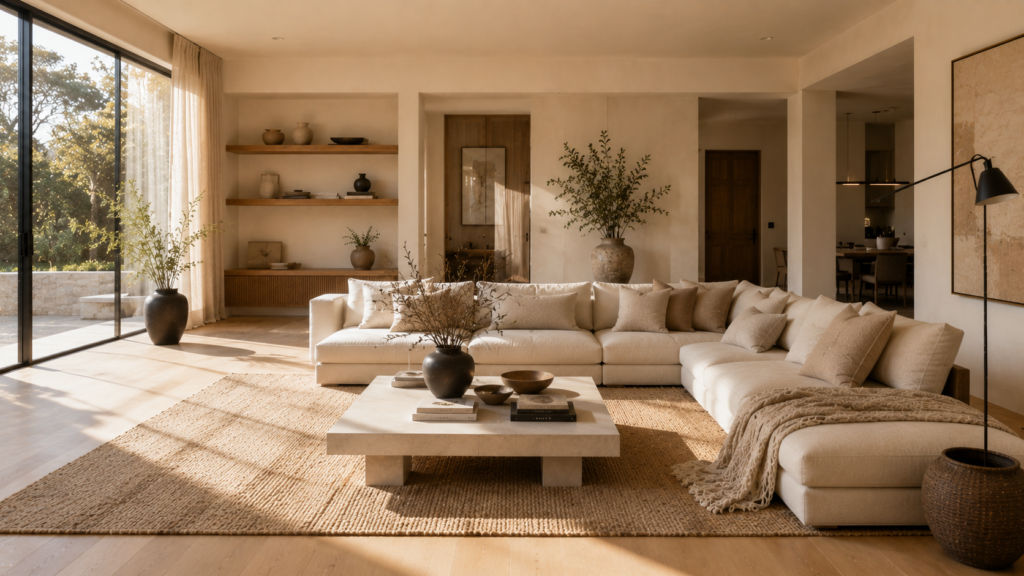
- Makes ceilings appear taller and rooms larger
- Creates a calm modern atmosphere effortlessly
- Improves visual openness in compact layouts
- Gives the space a sleek designer-inspired look
Low-profile seating instantly creates a relaxed and spacious feeling by keeping visual lines lower throughout the room. Sofas and chairs with shorter backs allow windows, artwork, and architectural details to stand out more clearly while helping ceilings appear taller. I’ve seen this work especially well in smaller living rooms where oversized furniture makes the layout feel crowded or visually heavy. The cleaner silhouette also creates a more modern atmosphere without requiring dramatic decor changes. Even simple neutral seating with lower proportions can completely refresh the room and make it feel lighter, calmer, and more open.
One major advantage of low-profile furniture is how naturally it supports minimalist and modern organic interiors without looking cold or uncomfortable. Pairing sleek seating with textured rugs, warm woods, and layered lighting keeps the room balanced and welcoming. In my experience, these pieces work best when there is enough surrounding negative space to highlight the open layout properly. That’s why many designers recommend avoiding bulky side furniture nearby. The finished arrangement feels airy, polished, and visually calm while still remaining practical for daily living, entertaining guests, and creating a comfortable family-friendly environment.
Refreshing your home does not always require a complete renovation or expensive furniture upgrades. Sometimes the smallest design choices create the biggest visual transformation. These Living Room Design Ideas were created to help you build a space that feels warm, stylish, functional, and genuinely comfortable for everyday living. I’ve seen how simple updates like layered lighting, textured fabrics, and thoughtful furniture placement can completely change the mood of a room. Save your favorite ideas on Pinterest, try a few in your own space, and share this article with anyone looking for fresh inspiration. A cozy dream living room may be closer than you think.
Comments if you like Living Room Design Ideas